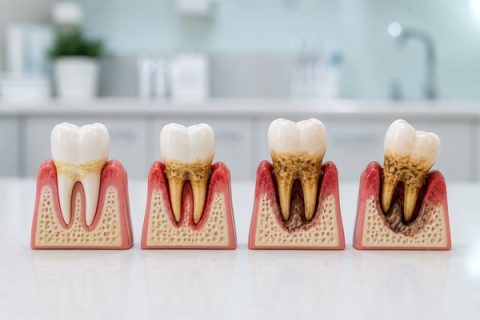
What Happens If Gum Disease Is Left Untreated?
If gum disease is left untreated, it can progress from bleeding or inflamed gums to deeper periodontal pockets, gum recession, bone loss, loose teeth, and eventually tooth loss in more advanced cases. Gum disease does not always cause pain early, so it can worsen quietly before a patient realizes how much support has been affected.
At Bailey Family Dental in Whittier, we evaluate gum disease by checking gum inflammation, bleeding, tartar buildup, periodontal pocket depths, gum recession, tooth mobility, bite changes, and dental X-rays. The goal is to identify the stage of gum disease before it causes more long-term damage.
What Happens If Gum Disease Is Left Untreated?
Untreated gum disease can gradually damage the tissues that hold the teeth in place. In the early stage, called gingivitis, the gums may become red, swollen, tender, or bleed when brushing and flossing. At this stage, the problem may still be reversible with professional cleaning and better home care.
If gum disease progresses into periodontitis, the infection and inflammation can affect deeper tissues, including the bone that supports the teeth. Once bone support is lost, the goal usually shifts from reversing the condition to controlling it and preventing further damage.
If you are wondering whether gum disease can still improve, our Can Gum Disease Be Reversed? blog explains the difference between early gingivitis and more advanced periodontitis.
Untreated Gum Disease Can Cause Deeper Pockets
Healthy gums fit closely around the teeth. When gum disease progresses, the gums can pull away from the teeth and form deeper periodontal pockets. These pockets can trap plaque, tartar, and bacteria below the gumline.
Deeper pockets are harder to clean at home. As bacteria collect in those areas, inflammation can continue and the condition may become more difficult to manage without professional treatment.
Our Gum Disease Treatment page explains how periodontal pockets, bleeding, tartar, and bone support are evaluated during a gum disease exam.
Gum Disease Can Lead to Bleeding, Swelling, and Bad Breath
Bleeding gums are often one of the first signs that the gums are inflamed. Swelling, tenderness, redness, and bad breath may also develop when plaque and tartar remain around the gumline.
These symptoms can come and go, which can make gum disease easy to ignore. However, improvement for a few days does not always mean the underlying problem is gone, especially if tartar is still present below the gums.
If bleeding is your main concern, visit our Why Are My Gums Bleeding? page. If the gums feel puffy or irritated, our Swollen Gums page may also be helpful. If odor is the main concern, our Bad Breath page explains other possible causes.
Gum Recession Can Become More Noticeable
As gum disease progresses, the gums may recede or pull away from the teeth. This can make teeth look longer, expose root surfaces, increase sensitivity, and create areas that are harder to keep clean.
Gum recession does not always mean active gum disease is present, but when recession appears with bleeding, deeper pockets, tartar buildup, or bone loss, it should be evaluated.
If you are noticing changes at the gumline, our I Think My Gums Are Receding page explains that symptom in more detail.
Untreated Gum Disease Can Cause Bone Loss
One of the biggest concerns with untreated periodontitis is bone loss around the teeth. The bone and attachment around the roots help keep teeth stable. When that support is damaged, teeth may begin to shift, feel loose, or become harder to save.
Bone loss is not always obvious by looking in the mirror. A patient may not feel much pain, even when periodontal pockets are deeper or X-rays show changes in bone support.
Personal insight: In our office, one of the most important things we look for is whether the gum problem is only inflammation or whether it has started affecting the support around the teeth. Bleeding matters, but pocket depths, X-rays, and bone support tell us how serious the condition may be.
Teeth Can Start to Feel Loose or Shift
When gum disease affects the bone and attachment around teeth, teeth may start to feel loose, move slightly, or fit together differently when biting. Some patients notice spaces opening between teeth or feel that their bite has changed.
A loose adult tooth should be evaluated. Mobility can come from gum disease, bite pressure, trauma, infection, or other dental problems, so an exam is needed to determine the cause.
If this is what you are noticing, our Why Do My Teeth Feel Loose? blog explains why loose-feeling teeth should not be ignored.
Advanced Gum Disease Can Lead to Tooth Loss
In advanced cases, untreated gum disease can lead to teeth becoming loose enough that they cannot be predictably saved. Tooth loss can affect chewing, speech, appearance, bite stability, and the need for future tooth replacement options.
This does not mean every patient with gum disease will lose teeth. It means gum disease should be identified and managed early so the teeth and supporting structures can be protected as much as possible.
If a tooth is already severely loose or unsupported, treatment options may be different. In some cases, tooth extraction may be discussed if the tooth cannot be maintained predictably.
What Treatment Helps Prevent Gum Disease From Getting Worse?
Treatment depends on the stage of gum disease. Early gingivitis may improve with professional cleaning and better brushing and flossing habits. More advanced gum disease may need deeper periodontal cleaning and ongoing maintenance.
If tartar and bacteria are present below the gumline, Root Scaling and Planing may be recommended. This is different from a routine cleaning because it focuses on deeper areas around the roots and periodontal pockets.
After active periodontal treatment, some patients need Periodontal Maintenance to monitor gum stability, pocket depths, bleeding, tartar buildup, and long-term disease control.
Can You Wait If Gum Disease Does Not Hurt?
It is risky to wait just because gum disease does not hurt. Gum disease often progresses slowly and may cause little discomfort until the condition is more advanced. By the time teeth feel loose or chewing becomes painful, more support may already be affected.
A dental evaluation can help determine whether the gums are healthy, mildly inflamed, or showing signs of periodontitis. Earlier treatment may be simpler and may help reduce the risk of long-term damage.
So, What Happens If Gum Disease Is Left Untreated?
If gum disease is left untreated, it may progress from bleeding and inflammation to deeper periodontal pockets, gum recession, bone loss, loose teeth, and tooth loss in severe cases. The earlier gum disease is identified, the better the chance of controlling it before more support is damaged.
If your gums bleed, you have swollen gums, your gums look receded, or your teeth feel loose, schedule a dental evaluation. Gum disease is often easier to manage when it is addressed before symptoms become severe.
Reviewed by Brian Choi, DMD
General Dentist at Bailey Family Dental in Whittier, CA
Updated: July 2026
Concerned about untreated gum disease?
Gum disease can worsen without obvious pain. Bailey Family Dental in Whittier can check your gums, measure periodontal pockets, review X-rays, and explain whether your gum condition may need routine cleaning, deep cleaning, periodontal maintenance, referral, or another next step.
We’re currently accepting new patients.
Request an Appointment