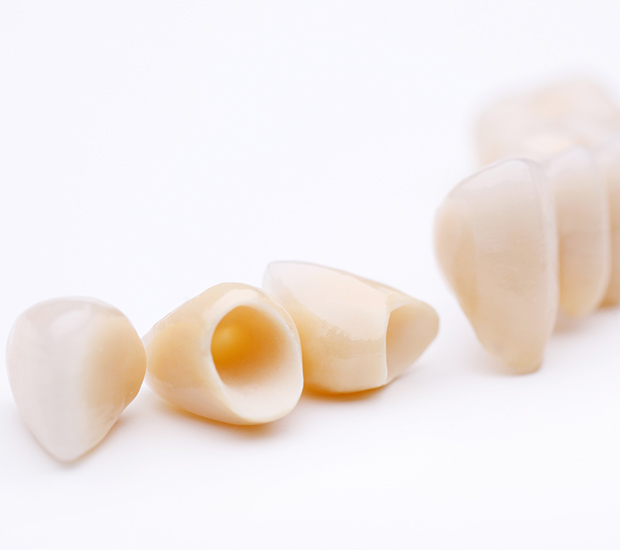
Dental Crowns and Dental Bridges Whittier, CA
One of the most common dental treatments involves fixing tooth decay. The first line of defense against a cavity is a filling. However, deeper decay may require more extensive repair. In such cases, dentists may rely on a dental crown treatment or a dental cap.
Dental crown treatment is available at Bailey Family Dental - Brian Choi, DMD - Whittier, CA in Whittier and the surrounding area. Crowns help restore a tooth that has significant damage with a custom-sized cap that fits over the old tooth. We provide dental crowns and restorations for our patients. For broken or damaged teeth, crowns may be the right solution. Call us at (562) 698-8739 to get your teeth problems checked out today.
Dental Crowns Explained
Dental crowns are often used when a tooth needs more protection than a filling can provide. A crown may be recommended for a tooth weakened by a large cavity, a crack, a large older filling, or after root canal treatment. Crowns can help restore tooth shape, chewing function, and support when enough healthy tooth structure remains.
“Dentists can work with their dental lab and the patient to create custom-fitting dental crowns that may restore a tooth’s shape and size to near perfect.”
How Dental Bridges Work with Dental Crowns
A dental bridge can use dental crowns to help replace a missing tooth. For a traditional bridge, the teeth next to the missing space are reshaped so crowns can support the replacement tooth between them. This is one option for patients comparing ways to close a gap after tooth loss. To learn more, visit our page on options for replacing missing teeth.
Why Patients Get a Dental Crown
Some patients may choose dental crowns to avoid further damage or decay to an existing tooth or to maintain an aesthetically pleasing smile. Crowns can also help prevent tooth loss that could lead to additional oral health problems and more expensive dental work. Additionally, patients may find crowns help them maintain a normal bite and keep the teeth from shifting.
Receiving a Dental Crown Step-by-Step
It may take a few appointments for a patient to receive a crown. In many cases, the dental crown procedure is part of another dental treatment plan, such as a root canal. Here is the step-by-step process for getting a dental crown:
- Before the Crown. The dentist treats any problems before starting the dental crown creation process. Any infections or cavities must be addressed or filled. Sometimes, an old crown needs replacement. In this case, the dentist will remove the remnants first.
- Preparation. Next, the dentist must prepare the tooth for the crown. The dentist or another member of our team will shave down the tooth to make room for the crown. Then, the dental staff makes a series of impressions to send to the lab. Some patients receive a temporary crown at the end of this appointment.
- Crown Delivery. Once the crown is ready for delivery, the patient must return to the office for placement. First, the dentist tries on the crown to make sure it feels and looks right in the mouth. If it fits correctly, the dentist uses dental cement to glue it in place permanently.
See our Google reviews: Read what patients are saying about Bailey Family Dental
Questions Answered on This Page
Q. What are dental crowns used for?
Q. How do dental bridges work with dental crowns?
Q. Why should I get a dental crown?
Q. What is it like to receive a dental crown?
People Also Ask
Q. Am I a good candidate for a dental bridge?
Q. Why does my tooth hurt when I bite down?
Frequently Asked Questions
Q. Does getting a dental crown hurt?
A. During preparation, the dentist may numb the area for comfort. Some soreness after a crown appointment can be normal, but pain that continues or worsens may need an adjustment or further evaluation.
Q. Does a dental crown look natural?
A. Many dental crowns are designed to look similar to natural teeth. The shade, shape, and material are selected based on the tooth location, bite, and cosmetic goals.
Q. Does a dental crown need replacement?
A. Dental crowns can need replacement over time due to wear, fracture, decay around the edges, bite changes, or changes in the supporting tooth. Regular exams help monitor crowns before problems become larger.
Q. When is a crown needed instead of a filling?
A. A crown may be recommended when a tooth has too much damage, cracking, deep decay, a very large filling, or needs added protection after root canal treatment. A filling may be enough when the remaining tooth structure is stronger and the damaged area is smaller.
Q. How long does it take to get a crown?
A. The crown timeline depends on the tooth, whether other treatment is needed first, and how the crown is made. Some teeth need additional steps such as a buildup, root canal treatment, or temporary crown before the final crown is placed.
Q. What are alternatives to a dental crown?
A. Depending on the tooth, alternatives may include a filling, inlay, onlay, root canal treatment with restoration, extraction, or replacement options. The right choice depends on symptoms, X-rays, bite forces, and how much healthy tooth structure remains.
Reviewed by Brian Choi, DMD
General Dentist at Bailey Family Dental in Whittier, CA
Updated: June 2026
Schedule a Dental Crown Consultation in Whittier
If you have a broken tooth, large cavity, old crown concern, or pain when chewing, Bailey Family Dental can evaluate the tooth and explain whether a crown, filling, root canal, extraction, or another option is the best next step.
Call Bailey Family Dental in Whittier at 562-698-8739 to schedule a dental crown consultation.