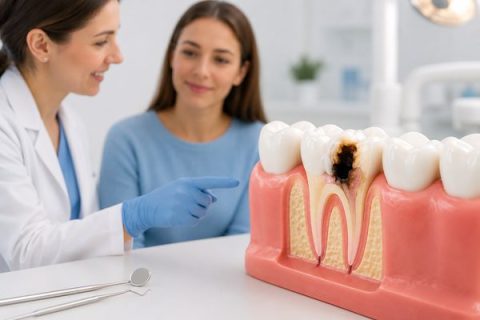
Can a Cavity Go Away on Its Own?
A cavity usually does not go away on its own once the tooth structure has broken down. Very early enamel changes may sometimes be slowed, stopped, or strengthened with good prevention, but an actual hole or softened area in the tooth typically needs dental treatment.
At Bailey Family Dental in Whittier, we evaluate cavities by looking at the tooth, checking symptoms, reviewing X-rays when appropriate, and explaining whether the area can be monitored, treated with prevention, repaired with a filling, or needs a different treatment option. To understand why X-rays matter, read our blog on Why You Need Dental X-Rays for a Checkup.
Quick answer: A true cavity usually does not go away on its own. Very early enamel weakening may sometimes be stabilized with fluoride, better cleaning, and prevention, but a hole, soft spot, or broken tooth structure usually needs dental treatment.
Can a Cavity Heal by Itself?
A cavity cannot truly “heal” by itself once the tooth has a hole, soft decay, or broken-down structure. Tooth enamel does not grow back the same way skin heals after a cut.
However, very early enamel weakening may sometimes be stabilized before it becomes a true cavity. This early stage may look like a white spot or a chalky area on the tooth. At that point, fluoride, improved cleaning, diet changes, and reducing acid exposure may help strengthen the enamel and lower the chance of the area getting worse.
To understand how decay can move from early enamel changes to deeper tooth damage, visit our Tooth Decay Stages page.
The Difference Between Early Enamel Damage and a True Cavity
This is the main point that confuses many patients. An early weak spot in enamel may not always need a filling right away. But once decay breaks through the enamel or creates a physical hole, the damaged tooth structure does not rebuild itself.
Clinical insight: The question is not just “Do I have decay?” The question is whether the tooth surface is still intact, whether the area is active, and whether the cavity has reached a point where a restoration is needed. If you are unsure whether a cavity always needs treatment, read our blog on Does a Cavity Always Need a Filling?
- Early enamel change: May be monitored or treated with prevention if the surface is still intact.
- Small cavity: Usually needs a filling once tooth structure has broken down.
- Larger cavity: May need a larger restoration, crown, root canal treatment, or another option.
- Deep cavity: May involve the nerve or weaken the tooth enough that treatment becomes more complex.
What Happens If You Leave a Cavity Alone?
If a true cavity is left untreated, it can continue to grow. Decay may spread through enamel into dentin, get closer to the nerve, weaken the tooth, or cause pain, infection, or a broken tooth.
A small cavity may be simple to treat. A larger cavity may need more than a filling. If decay reaches the nerve, root canal treatment may be needed to save the tooth. In some cases, if too much tooth structure is lost, extraction may be discussed.
For a broader explanation of treatment decisions, visit our Cavity Treatment page. To understand why waiting can be risky, read our blog on What Happens If You Do Not Fill a Cavity?
Can Fluoride Reverse a Cavity?
Fluoride can help strengthen enamel and may help early enamel damage before a true hole forms. It cannot rebuild a missing piece of tooth structure once a cavity has already broken down the tooth.
This is why timing matters. If a weak area is found early enough, prevention may be part of the plan. If the area has already softened, opened, or spread deeper, a filling or another restoration may be needed.
For prevention guidance, visit our Preventative Dental Care page. If dry mouth or frequent cavities are part of the concern, read our blogs on Can Dry Mouth Cause Cavities? and Why Do I Keep Getting Cavities?
Can Brushing or Flossing Make a Cavity Go Away?
Brushing and flossing are important, but they usually cannot make an existing cavity disappear. They can help remove plaque, reduce acid exposure, and lower the risk of new cavities or early enamel damage getting worse.
If a cavity is already present, brushing may keep the area cleaner, but it will not refill the hole or replace damaged tooth structure. This is especially true for cavities between teeth, near the gumline, or around old dental work.
For daily cleaning basics, visit our Oral Hygiene Basics page.
What If the Cavity Does Not Hurt?
A cavity can be present even if the tooth does not hurt. Early cavities may not cause symptoms because decay has not reached the more sensitive inner layers of the tooth yet.
Some patients only notice a dark spot, rough area, food trapping, floss catching, or mild sensitivity to sweets or cold. Others feel nothing at all until the cavity is found during an exam or on X-rays. If sweets trigger discomfort, read our blog on Tooth Pain When Eating Sweets.
If you are trying to tell whether you may have a cavity, read our blog on Signs You May Have a Cavity Even Without Pain.
Can Cavities Between Teeth Go Away on Their Own?
Cavities between teeth can be difficult to see without X-rays because they form where two teeth touch. If the area is only an early enamel change, prevention may help slow or stop progression. If the cavity has broken through the enamel, it usually needs treatment.
These cavities are important to catch early because they can grow quietly before causing pain. Food trapping, floss catching, sweet sensitivity, or a dark shadow between teeth may be warning signs.
Learn more on our Cavities Between Teeth page.
Can a Root Cavity Near the Gumline Go Away?
Root cavities near the gumline usually need close evaluation because exposed root surfaces are softer than enamel. When gum recession exposes the root, plaque and acid can damage the tooth faster than patients expect.
A very early area may sometimes be managed with prevention, but a soft, dark, rough, or open root cavity usually needs treatment. The area also has to be shaped in a way that stays clean after repair.
For more detail, visit our Root Cavities Near the Gumline page.
Can Decay Under a Filling or Crown Go Away?
Decay under or around an old filling or crown does not go away on its own. If bacteria are getting under a leaking filling edge or crown margin, the decay may continue to spread underneath the dental work.
Warning signs may include a dark edge, rough margin, bad taste, odor, food trapping, floss catching, cold sensitivity, or a loose filling or crown. Sometimes there are no symptoms early.
Learn more on our Cavity Under a Filling or Crown page.
When Does a Cavity Need a Filling?
A cavity usually needs a filling when decay has created a hole, softened the tooth, or reached a point where prevention alone is not likely to stop the damage. A filling removes the decayed portion and restores the missing tooth structure.
Small to moderate cavities can often be repaired with a tooth-colored filling when enough healthy tooth remains. Learn more on our Composite Fillings page.
If the cavity is large, the tooth may need a crown, root canal treatment, or another option depending on how much tooth structure remains. Visit our Large Cavity: Filling vs. Crown vs. Root Canal page.
When to See a Dentist
You should schedule a dental visit if you notice a dark spot, rough area, hole, sweet sensitivity, cold sensitivity, food getting stuck, floss catching, or symptoms that keep returning. If you are unsure whether a dark spot is decay, read our blog on Is a Black Spot on a Tooth Always a Cavity? If you are wondering how long you can wait, read our blog on How Long Can You Wait to Fill a Cavity?
You should also keep regular dental exams even when nothing hurts. A dental cleaning and examination can help find early cavities before they become painful or more difficult to treat.
If you are in Whittier and are wondering whether a cavity can be monitored or needs treatment, call Bailey Family Dental at 562-698-8739 to schedule an evaluation. We can help determine whether the area is an early enamel change, a true cavity, or another dental concern.
Reviewed by Brian Choi, DMD
General Dentist at Bailey Family Dental in Whittier, CA
Updated: August 2026
Not sure if a cavity needs treatment?
Some early enamel changes may be monitored, but a true cavity usually does not go away on its own. At Bailey Family Dental in Whittier, we can evaluate the tooth and explain whether prevention, a filling, or another treatment option may be appropriate.
We’re currently accepting new patients.
Book an Appointment