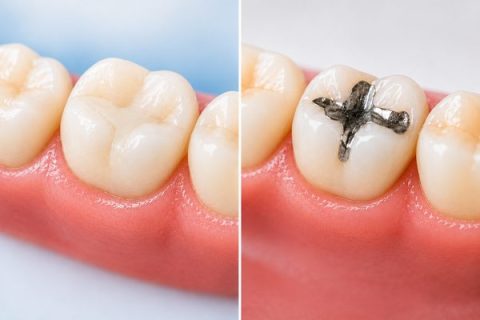
Tooth-Colored Fillings vs Silver Fillings
Tooth-colored fillings and silver fillings can both repair cavities, but they look different, bond to the tooth differently, and may be recommended for different situations. Tooth-colored fillings are made to blend in with the natural tooth, while silver fillings are more visible and have historically been used for strength in back teeth.
At Bailey Family Dental in Whittier, we evaluate the size of the cavity, tooth location, bite forces, appearance concerns, old dental work, X-rays when appropriate, and how much healthy tooth structure remains before recommending the right filling option. To understand why X-rays matter, read our blog on Why You Need Dental X-Rays for a Checkup.
Quick answer: Tooth-colored fillings are designed to blend in with your natural teeth and are commonly used for small to moderate cavities. Silver fillings are more noticeable and may be associated with older dental work. The best choice depends on the tooth, cavity size, bite, appearance goals, and long-term strength needs.
Tooth-Colored Fillings vs Silver Fillings: What Is the Difference?
Tooth-colored fillings are usually made from composite resin, a material that can be matched to the shade of your natural tooth. Silver fillings usually refer to dental amalgam, a metal-based filling material that has been used for many years.
The main differences are appearance, bonding, tooth preparation, durability, and how the material behaves over time. A dentist can help explain which option makes sense based on the tooth being treated. If you are unsure whether a cavity needs treatment, read our blog on Does a Cavity Always Need a Filling?
For more detail about tooth-colored filling treatment, visit our Composite Fillings page.
What Are Tooth-Colored Fillings?
Tooth-colored fillings are designed to repair a cavity while blending in with the surrounding tooth. They are commonly used for visible teeth and back teeth when the cavity is small to moderate and enough healthy tooth structure remains.
Composite filling material bonds to the tooth, which can help support a conservative repair when the situation is appropriate. The dentist removes the decay, prepares the area, places the filling material, shapes it, and polishes it so the bite feels comfortable.
Tooth-colored fillings are often preferred by patients who want a natural-looking result.
What Are Silver Fillings?
Silver fillings usually refer to amalgam fillings. These fillings are metal-colored and may appear silver, gray, or darker over time. Many patients have older silver fillings from years ago, especially on back teeth.
Silver fillings have historically been used because they can be strong in chewing areas. However, they are more visible than tooth-colored fillings and do not blend into the tooth.
If you already have older silver fillings, they do not always need to be replaced just because they are silver. A dentist usually checks whether the filling is sealed, stable, cracked, leaking, or developing decay around the edges.
Which Filling Looks Better?
Tooth-colored fillings usually look better cosmetically because they are matched to the natural tooth shade. This is especially important for front teeth, premolars, and any area that shows when you smile or talk.
Silver fillings are more noticeable. On back teeth, appearance may matter less to some patients, but others still prefer tooth-colored material so the filling is less visible.
Which Filling Is Better for Back Teeth?
Back teeth handle more chewing pressure, so strength matters. Tooth-colored fillings can work well for many small to moderate cavities on back teeth, but the size and location of the cavity are important.
If a cavity is very large or the tooth is weak, a simple filling may not be enough regardless of the material. In those cases, a dentist may discuss an inlay, onlay, or crown instead.
If you are comparing treatment options for a larger cavity, visit our Large Cavity: Filling vs. Crown vs. Root Canal page.
Do Tooth-Colored Fillings Require Less Tooth Removal?
In many cases, tooth-colored fillings can be placed conservatively because composite bonds to the tooth. This can allow the dentist to repair the cavity while preserving healthy tooth structure when the cavity shape and location allow it.
However, the most important factor is still complete removal of decay and creating a restoration that seals well and can handle normal chewing forces.
Do Silver Fillings Last Longer?
Silver fillings have a long history of durability, especially in back teeth. Tooth-colored fillings can also last many years when they are placed well, maintained properly, and used in the right situation.
No filling material lasts forever. Fillings can wear, chip, stain, leak, crack, or develop decay around the edges over time. The lifespan depends on cavity size, bite forces, grinding, home care, diet, dry mouth, and routine dental visits.
Can Cavities Form Around Old Fillings?
Yes. Cavities can form around both tooth-colored and silver fillings. This is called recurrent decay. It may happen if a filling edge leaks, a margin becomes rough, food traps around the filling, or plaque collects in the area.
Warning signs may include food getting stuck, floss catching, cold sensitivity, a dark edge, roughness, odor, bad taste, or a filling that feels loose or broken.
Learn more on our Cavity Under a Filling or Crown page.
Should Old Silver Fillings Be Replaced?
Old silver fillings do not always need to be replaced. If the filling is sealed, comfortable, and the tooth is healthy, a dentist may simply monitor it during routine exams.
Replacement may be recommended if the filling is cracked, leaking, loose, broken, causing symptoms, trapping food, or if decay is forming around it. Some patients also ask about replacement for cosmetic reasons, but that decision should be made carefully after an exam.
Clinical insight: The question is not “Is the filling silver?” The better question is “Is the filling still sealing and protecting the tooth?” A stable old filling may be monitored, while a failing filling may need repair or replacement.
Are Tooth-Colored Fillings Safer Than Silver Fillings?
Many patients ask this because silver fillings contain metal, while tooth-colored fillings do not look metallic. In routine dental decision-making, the choice is usually based on the tooth, cavity size, appearance goals, bite forces, and condition of existing dental work.
Some patients are mainly concerned about appearance, while others are concerned about older filling materials or whether a filling should be replaced. The safest choice is usually based on the condition of the tooth and the risks and benefits of changing the existing restoration.
If you have specific concerns about filling materials, pregnancy, allergies, grinding, or replacing older fillings, it is best to discuss them directly with your dentist before treatment.
Which Filling Is Best for Front Teeth?
Tooth-colored filling material is usually preferred for front teeth because it can be matched to the surrounding enamel. It can repair small cavities, chips, worn edges, or minor cosmetic concerns when appropriate.
For larger front tooth concerns, a dentist may also discuss bonding, veneers, or crowns depending on how much tooth structure is affected.
Which Filling Is Best for a Cavity Between Teeth?
Cavities between teeth are often found on X-rays because they form where two teeth touch. The filling material depends on the size and position of the cavity, how much tooth structure remains, and whether the area can be sealed properly.
Tooth-colored fillings are commonly used for many cavities between teeth, but each case depends on the tooth and cavity depth.
Learn more on our Cavities Between Teeth page.
When a Filling May Not Be Enough
A filling works best when the cavity is small to moderate and the tooth still has enough healthy structure to support it. If the cavity is large, deep, cracked, or has weakened the tooth, a filling may not provide enough strength.
In those cases, a dentist may recommend a crown or another treatment option to protect the tooth. Visit our Dental Crowns page to learn more.
How a Dentist Helps You Choose
A dentist considers more than appearance alone. The right filling material depends on the tooth, location, size of the cavity, bite pressure, moisture control, existing dental work, and patient preferences.
A dentist may consider:
- Whether the tooth is visible when smiling
- How large or deep the cavity is
- Whether the filling will be on a front tooth or back tooth
- How much chewing pressure the tooth receives
- Whether the tooth already has a large filling
- Whether the patient grinds or clenches
- Whether there is decay around old dental work
- Whether a crown would protect the tooth better than a filling
For a broader overview of cavity repair options, visit our Cavity Treatment page.
When to See a Dentist
You should schedule a dental visit if you have a cavity, an old filling that feels rough or loose, food getting stuck around a filling, sensitivity, a broken filling, or concerns about replacing silver fillings.
You should also keep routine dental exams even if nothing hurts. A dental cleaning and examination can help check whether existing fillings are stable and whether new cavities are forming.
If you are in Whittier and are comparing tooth-colored fillings vs silver fillings, call Bailey Family Dental at 562-698-8739 to schedule an evaluation. We can explain whether a tooth-colored filling, replacement filling, crown, or another option may be appropriate.
Reviewed by Brian Choi, DMD
General Dentist at Bailey Family Dental in Whittier, CA
Updated: September 2026
Considering tooth-colored fillings?
Tooth-colored fillings can repair many small to moderate cavities while blending in with your natural tooth. At Bailey Family Dental in Whittier, we can evaluate the tooth and explain the treatment option that best fits your situation.
We’re currently accepting new patients.
Book an Appointment