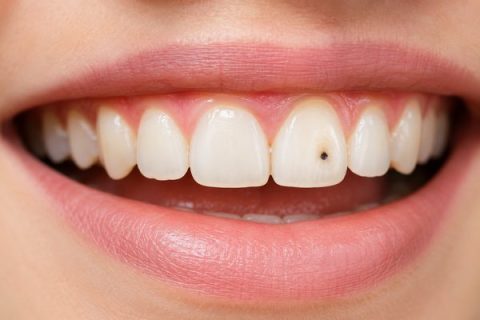
Is a Black Spot on a Tooth Always a Cavity?
A black spot on a tooth is not always a cavity, but it should be checked by a dentist. Dark spots can come from tooth decay, stains, tartar, old dental work, deep grooves, or changes in the enamel. The important question is whether the tooth structure is healthy, stained, or actually breaking down.
At Bailey Family Dental in Whittier, we evaluate dark spots by checking the tooth surface, location, texture, symptoms, existing dental work, and X-rays when appropriate. This helps determine whether the spot is harmless staining, early decay, a true cavity, or another dental concern. To understand why X-rays matter, read our blog on Why You Need Dental X-Rays for a Checkup.
Quick answer: A black spot on a tooth is not always a cavity. It may be a surface stain, tartar, a stained groove, old dental work, or early tooth decay. If the spot is soft, rough, growing, sensitive, trapping food, or near an old filling or crown, it should be evaluated.
Is a Black Spot on a Tooth Always a Cavity?
No. A black spot on a tooth can be a cavity, but it can also be something else. Some dark spots are surface stains that sit on the outside of the enamel. Others are signs that decay has softened or damaged the tooth structure.
A dentist looks at more than color alone. The size, texture, location, symptoms, X-ray appearance, and whether the area catches an explorer or traps plaque all matter.
If you are trying to understand whether a spot may be tooth decay, visit our Cavity Treatment page. If you are wondering whether early decay can improve, read our blog on Can a Cavity Go Away on Its Own?
When a Black Spot May Be a Cavity
A black or dark brown spot may be a cavity if decay has damaged the enamel or dentin. Cavities may start as white or chalky areas, then darken as the tooth structure breaks down or becomes stained by bacteria and food debris.
Warning signs that a black spot could be decay include:
- The spot feels soft, sticky, rough, or like a hole
- The spot is getting larger or darker over time
- Food gets stuck in the same area
- Floss catches, shreds, or tears near the spot
- The tooth is sensitive to sweets, cold, or chewing
- The spot is between teeth or near the gumline
- The spot is next to an old filling or crown
If the spot is related to tooth decay, early treatment can help prevent the cavity from getting larger. To understand how decay progresses, visit our Tooth Decay Stages page.
When a Black Spot May Be a Stain
Some black or dark spots are stains on the outside of the tooth rather than cavities. Stains can collect in grooves, pits, small surface irregularities, or around areas that are harder to clean.
Common causes of dark staining may include coffee, tea, red wine, tobacco, certain foods, dark drinks, or plaque that has absorbed stain over time.
A stain may look concerning but still feel hard and smooth when checked by a dentist. If the tooth structure is intact and there are no signs of active decay, treatment may involve cleaning, polishing, monitoring, or cosmetic options depending on the cause.
A spot that has looked the same for years may be less concerning than a new spot, a growing spot, or an area that recently became rough or sensitive.
Could It Be Tartar?
Dark buildup on a tooth may also be tartar, especially near the gumline or behind the lower front teeth. Tartar is hardened plaque that cannot be removed with regular brushing or flossing at home.
Tartar may look yellow, brown, or dark. It can trap more plaque near the gums and increase the risk of cavities or gum inflammation if it is not removed during a professional cleaning.
If you are due for a cleaning, visit our Dental Cleaning and Examinations page.
Could It Be a Stained Groove?
Back teeth often have natural grooves and pits. These grooves can collect stain and appear dark even when there is no active cavity. However, grooves are also common places for cavities to start because plaque can sit in them.
This is why a dark groove should be checked rather than guessed at. A dentist may evaluate whether the groove is hard and stained or soft and decayed.
For patients with deep grooves and higher cavity risk, dental sealants may sometimes be recommended when appropriate. Learn more on our Dental Sealants page.
Could a Black Spot Be From an Old Filling or Crown?
A dark area near an old filling or crown may be stain, metal shadowing, exposed filling material, or recurrent decay. Recurrent decay means a new cavity has formed around or under existing dental work.
Warning signs may include a dark edge, rough margin, food trapping, floss catching, odor, bad taste, cold sensitivity, or a filling or crown that feels loose.
Because decay around old dental work can be difficult to judge from the outside, a dentist may need to examine the area closely and take X-rays when appropriate. Learn more on our Cavity Under a Filling or Crown page.
What If the Black Spot Is Between Teeth?
A black or dark shadow between teeth can be more concerning because cavities between teeth are hard to see directly. Sometimes a patient notices a dark area, floss catching, food trapping, or sweet sensitivity before the cavity is obvious.
Dental X-rays are often used to check for cavities between teeth because these areas are not fully visible during a mirror exam alone.
For more detail, visit our Cavities Between Teeth page.
What If the Black Spot Is Near the Gumline?
A dark spot near the gumline may be stain, tartar, exposed root surface, or a root cavity. Root cavities can form when gum recession exposes the softer root surface of the tooth.
Root surfaces are softer than enamel, so decay near the gumline can sometimes spread faster than patients expect. A dark, rough, soft, or sensitive area near the gums should be evaluated.
Learn more on our Root Cavities Near the Gumline page.
Can a Black Spot Be a Cavity Even If It Does Not Hurt?
Yes. A cavity can be present even when the tooth does not hurt. Early and moderate cavities may not cause pain until decay gets deeper or closer to the nerve.
Some patients only notice a black spot, rough area, food trapping, floss catching, or sensitivity to sweets or cold. Others feel nothing until the area is found during an exam or on X-rays. If sweets trigger discomfort, read our blog on Tooth Pain When Eating Sweets.
If you are unsure what early signs to watch for, read our blog on Signs You May Have a Cavity Even Without Pain.
Can You Tell at Home Whether It Is a Cavity?
You usually cannot know for sure at home. A black spot may look like a stain but still be decay, or it may look scary but only be a stained groove. Scraping, picking, or trying to remove the spot yourself can damage the tooth or gums.
A dentist can check whether the area is hard, soft, sticky, open, stained, or associated with decay on an X-ray. That information is what determines whether the spot needs treatment or monitoring.
How a Dentist Checks a Black Spot on a Tooth
A dentist may examine the color, shape, texture, and location of the spot. The exam may also include checking for plaque traps, rough edges, exposed root surfaces, old filling margins, and symptoms.
A dentist may also use X-rays when the spot is between teeth, near an old filling or crown, or in an area where decay is not fully visible.
Clinical insight: Color alone does not diagnose a cavity. Some dark spots are hard stains. Some light-colored areas are active early decay. The texture, depth, location, and X-ray findings matter more than color by itself.
Does a Black Spot Always Need a Filling?
No. A black spot does not always need a filling. If the spot is only stain and the tooth structure is hard and healthy, treatment may not be needed beyond cleaning, polishing, or monitoring.
If the spot is a true cavity with softened, open, or broken tooth structure, a filling or another restoration may be needed. Small to moderate cavities can often be repaired with tooth-colored filling material when enough healthy tooth remains.
For more on when fillings are needed, read our blog on Does a Cavity Always Need a Filling?
What Happens If It Is a Cavity and You Wait?
If the black spot is actually a cavity and it is not treated, decay may continue to spread. A small cavity can become larger, weaken the tooth, cause pain, reach the nerve, or lead to infection.
Waiting does not always cause an immediate problem, but delaying treatment can reduce the chance of keeping treatment simple. If you are wondering how long you can wait, read our blog on How Long Can You Wait to Fill a Cavity?
For more detail, read our blog on What Happens If You Do Not Fill a Cavity?
When to See a Dentist
You should schedule a dental visit if you notice a black spot that is new, growing, rough, sensitive, trapping food, catching floss, or located near the gumline or an old filling or crown.
You should also keep routine dental exams even if nothing hurts. A dental cleaning and examination can help determine whether a dark spot is stain, tartar, early decay, or a cavity that needs treatment.
If you are in Whittier and are worried about a black spot on a tooth, call Bailey Family Dental at 562-698-8739 to schedule an evaluation. We can check whether the spot is a cavity, stain, tartar, or another dental concern.
Reviewed by Brian Choi, DMD
General Dentist at Bailey Family Dental in Whittier, CA
Updated: September 2026
Worried about a black spot on your tooth?
A dark spot may be a stain, tartar, old dental work, or tooth decay. At Bailey Family Dental in Whittier, we can evaluate the tooth and explain whether the area needs monitoring, cleaning, a filling, or another treatment option.
We’re currently accepting new patients.
Book an Appointment