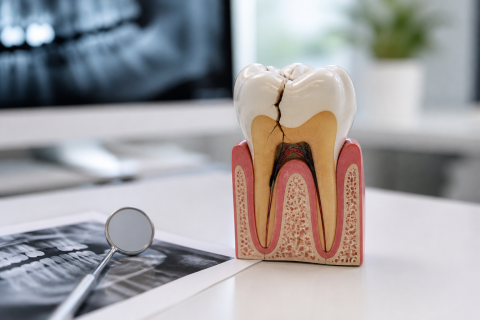
Is A Cracked Tooth An Emergency
A cracked tooth can be a dental emergency if you have severe pain, swelling, a loose tooth, a visible break, or pain that makes it difficult to chew. If the symptoms are mild and there is no swelling or instability, it may not always require same-day treatment, but it should still be evaluated soon.
Cracks can worsen over time, especially when the tooth continues to absorb chewing pressure. At Bailey Family Dental in Whittier, we evaluate how serious the crack appears, whether the tooth can be restored, and whether urgent treatment is needed.
Quick answer: A cracked tooth may be an emergency if you have severe pain, swelling, a loose tooth, a visible break, or trouble chewing. Mild symptoms may not always require same-day care, but the tooth should still be checked because cracks can spread under chewing pressure.
When a Cracked Tooth Is a Dental Emergency
A cracked tooth may be considered a dental emergency if the pain is severe, the tooth feels loose or unstable, swelling is present, or part of the tooth has broken off.
If the crack exposes the inner part of the tooth or causes intense pain when biting, chewing, or drinking, it should be evaluated promptly. These symptoms may indicate that the crack has reached deeper tooth structure or affected the nerve.
If you are in significant pain or notice swelling, contact an emergency dentist for guidance.
For patients in Whittier and nearby areas, Bailey Family Dental can help determine whether your cracked tooth needs urgent attention or a regular dental visit.
Signs You Should Not Ignore
Some cracked tooth symptoms are more concerning than others. Even if the tooth does not look badly broken, certain warning signs suggest that the tooth should be checked as soon as possible.
- Severe or worsening tooth pain
- Pain when biting or releasing pressure
- Swelling near the tooth or gums
- A tooth that feels loose, sharp, or unstable
- A visible crack, fracture, or broken piece of tooth
- Pain that lingers after hot, cold, or chewing pressure
- Difficulty chewing normally
Emergency vs Non-Emergency Cracked Tooth Symptoms
Some cracked tooth symptoms need urgent attention, while others may be safe to evaluate at a regular dental visit.
- More urgent: severe pain, swelling, a loose tooth, visible fracture, or inability to chew normally
- Less urgent but still important: mild discomfort, occasional pain when chewing, or symptoms that come and go without swelling
If you are unsure, it is safer to call a dentist and describe your symptoms rather than waiting for the crack to worsen. Our Whittier dental office can help you decide whether the situation sounds urgent.
If your symptoms are mainly related to chewing pressure, our Tooth Pain When Biting Down page explains that pattern in more detail.
When a Cracked Tooth May Not Be a Same-Day Emergency
A cracked tooth may not require same-day emergency care if the discomfort is mild, there is no swelling, the tooth is not loose, and you can avoid chewing on that side until it is evaluated.
That does not mean the crack should be ignored. Some cracks start with mild or inconsistent symptoms before becoming more painful or harder to restore.
If you notice symptoms that come and go, visit our Cracked Tooth Symptoms page to better understand what those warning signs may mean.
Why Cracked Teeth Can Get Worse
Cracked teeth are different from many other dental problems because chewing pressure can continue to stress the tooth. A small crack may spread if the tooth keeps flexing under bite forces, especially when there is a large filling or weakened tooth structure.
This is why cracked teeth often hurt during specific actions, such as chewing, biting down, or letting go after biting.
Personal insight: Patients sometimes tell us they waited because the pain was not constant. In our office, that “on and off” pattern is actually one of the common reasons we evaluate for a crack. The tooth may feel fine at rest but become painful when force is placed in just the wrong direction.
What to Do Until You See a Dentist
If you think you have a cracked tooth, avoid chewing hard foods on that side. Hard, sticky, or crunchy foods can place extra stress on the tooth and may worsen the crack.
You should also avoid using the tooth to test the pain repeatedly. Biting down over and over to “check” the tooth can make symptoms worse.
- Chew on the opposite side if possible
- Avoid hard or sticky foods
- Do not ignore swelling or worsening pain
- Call a dentist for an evaluation
- Seek urgent care if pain becomes severe or swelling develops
How a Dentist Evaluates a Cracked Tooth
A dentist may examine the tooth visually, check existing fillings or restorations, test how the tooth responds to bite pressure, and take dental X-rays when needed.
X-rays can help rule out infection, bone changes, or other dental problems, but small cracks do not always show clearly. That is why the pattern of symptoms is often just as important as the image.
A general dentist can help determine whether the tooth is cracked, whether the bite is contributing to the symptoms, and what treatment options make sense.
Treatment Depends on How Deep the Crack Is
Treatment for a cracked tooth depends on the size, location, and depth of the crack. Some cracked teeth can be restored, while others may require more extensive treatment.
- A filling if the damage is small and limited
- A dental crown if the tooth needs stronger protection
- Root canal treatment if the nerve is affected
- Extraction if the crack extends too deeply to save the tooth
You can learn more about repair options on our Broken or Cracked Tooth Repair page. If the tooth has an old filling or crown, our Cavity Under Filling or Crown page explains why decay around older dental work should be checked.
So, Is a Cracked Tooth an Emergency?
A cracked tooth can be an emergency, especially if there is severe pain, swelling, a loose tooth, or a visible break. If symptoms are mild, it may not always require same-day treatment, but it should still be evaluated before the crack worsens.
The safest approach is to avoid chewing on the tooth and schedule an exam. A dentist can determine whether the crack is minor, restorable, or urgent.
If the pain is severe, sudden, or associated with swelling, contact an emergency dentist as soon as possible.
Reviewed by Brian Choi, DMD
General Dentist at Bailey Family Dental in Whittier, CA
Updated: June 2026
Worried about a cracked tooth?
A cracked tooth is not always a same-day emergency, but it should not be ignored. At Bailey Family Dental in Whittier, we can evaluate the tooth, check how serious the crack is, and explain whether you need urgent treatment or a regular dental visit.
We’re currently accepting new patients.
Book an Appointment