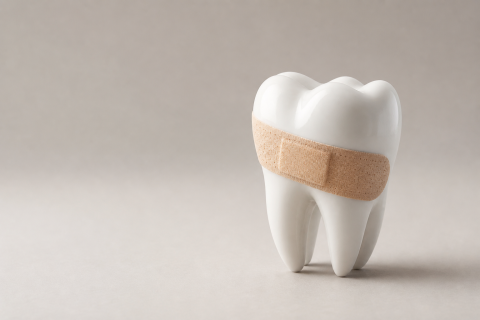
Can a Cracked Tooth Heal on Its Own?
A cracked tooth does not usually heal on its own. Unlike bone, tooth structure does not grow back together once a true crack has formed. Symptoms may come and go, but the crack itself can remain and may worsen under normal chewing pressure.
That does not mean every small line in a tooth needs aggressive treatment. Some superficial enamel lines may only need monitoring. However, if you suspect a true cracked tooth, it should be evaluated. A cracked tooth may feel better temporarily, but that does not mean it healed or that the tooth is safe to keep chewing on.
At Bailey Family Dental in Whittier, we evaluate cracked teeth by checking symptoms, bite pressure, existing fillings or crowns, dental X-rays, and whether the tooth may need monitoring, a filling, a crown, root canal treatment, or another option.
Quick answer: A true cracked tooth usually does not heal on its own. Some shallow enamel lines may only need monitoring, but a deeper crack can spread under chewing pressure and may need a filling, crown, root canal treatment, or removal if the crack becomes too severe.
Can a Cracked Tooth Heal on Its Own?
No, a true cracked tooth does not heal on its own. Once the tooth structure is cracked, the goal is not to “heal” the crack naturally. The goal is to determine how deep the crack goes and whether the tooth needs protection or treatment. If you are in Whittier and think you may have a cracked tooth, an evaluation can help determine how serious it is.
Some patients feel better for a while because they avoid chewing on that tooth or because the crack is not being stressed at that moment. That temporary improvement does not always mean the problem is gone.
Why Cracked Teeth Do Not Repair Themselves
Teeth are strong, but they do not repair structural cracks the same way soft tissue or bone can. Enamel and dentin do not knit back together after a crack forms.
Chewing pressure can also make a crack flex. Over time, that repeated pressure may cause the crack to spread, especially if the tooth has a large filling or weakened tooth structure, heavy bite forces, grinding habits, or existing damage.
Personal insight: In our office, cracked teeth are often frustrating for patients because the pain is not always constant. A tooth may feel fine one day and then hurt again when pressure hits the crack at the wrong angle.
When a Crack May Only Need Monitoring
Some very small surface lines, often called craze lines, may not require treatment if they are limited to the outer enamel and the tooth is otherwise healthy.
The challenge is that patients cannot always tell the difference between a harmless surface line and a crack that extends deeper into the tooth. That is why an exam is important, especially if the tooth hurts, feels weak, has a history of large fillings, trauma, or possible decay under an old filling or crown.
Signs a Cracked Tooth Should Be Checked
A cracked tooth should be evaluated if you notice pain when chewing, pain when releasing pressure, a tooth that hurts only sometimes, or discomfort that keeps returning in the same area.
If your main issue is recognizing the warning signs, visit our Cracked Tooth Symptoms page. If the pain is specifically triggered when biting down, our Tooth Pain When Biting Down page explains that pattern separately.
If the tooth is severely painful, swollen, loose, or difficult to chew on, it may need prompt care from an emergency dentist.
What Happens If You Wait Too Long?
Waiting can allow a crack to spread deeper into the tooth. In some cases, a tooth that may have been protected earlier with a restoration can become more difficult, more expensive, or even impossible to save later.
If the crack reaches the nerve, the tooth may need root canal treatment before it can be restored with a dental crown. If the crack extends too far below the gumline or splits the tooth, the tooth may not be repairable.
For a deeper look at treatment options, visit our Broken or Cracked Tooth Repair page. If you are wondering whether a more damaged cracked tooth can still be saved, read our page on Can a Cracked Tooth Be Saved With a Root Canal and Crown.
How a Dentist Evaluates a Cracked Tooth
A dentist may check how the tooth responds to pressure, examine existing fillings or crowns, evaluate the bite, and take dental X-rays when needed. Some cracks are difficult to see directly, so the pattern of symptoms can be just as important as what is visible.
Personal insight: When we evaluate a possible cracked tooth, we are not just asking whether a crack exists. We are trying to determine whether the tooth is stable enough to monitor, needs protection, or needs more involved treatment.
When to Schedule an Evaluation
If you think you have a cracked tooth, it is better to have it checked before the symptoms become more frequent or severe. Early evaluation may help preserve more natural tooth structure and avoid more complicated treatment.
A general dentist can evaluate the tooth and explain whether monitoring, a filling, a crown, root canal treatment, or another option may be appropriate.
Reviewed by Brian Choi, DMD
General Dentist at Bailey Family Dental in Whittier, CA
Updated: June 2026
Worried about a cracked tooth?
A cracked tooth usually does not heal on its own, even if the pain comes and goes. Bailey Family Dental in Whittier can evaluate the tooth, explain what is happening, and help you understand the best next step before the problem gets worse.
We’re currently accepting new patients.
Schedule an Appointment