Root Cavities Near the Gumline Whittier, CA
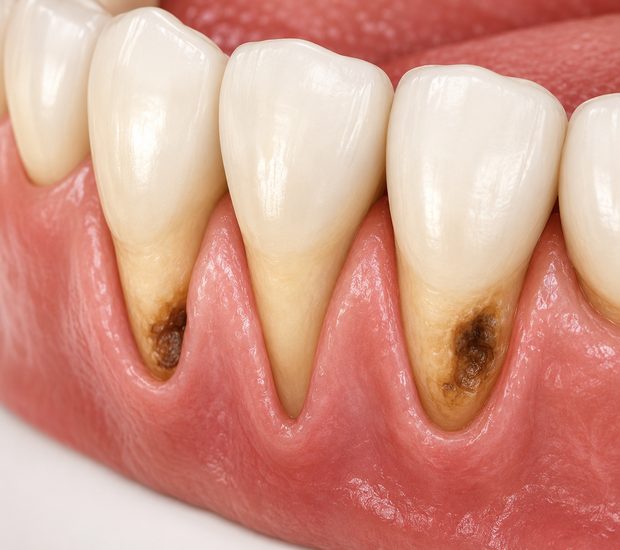
A cavity near the gumline can happen when the root surface of a tooth becomes exposed and plaque collects in that area. Root cavities may look like dark spots, rough areas, sensitivity near the gums, or notches along the tooth near the gumline.
At Bailey Family Dental in Whittier, we check cavities near the gumline by looking at the tooth surface, gum recession, plaque buildup, X-rays when appropriate, sensitivity, and whether the tooth can be repaired predictably.
Clinical insight: Root surfaces are softer than enamel, so cavities near the gumline can sometimes spread faster than patients expect. For more detail about why X-rays matter, read our blog on Why You Need Dental X-Rays for a Checkup.
If you are worried about a cavity near the gumline, call Bailey Family Dental at (562) 698-8739 to schedule an evaluation.
What Are Root Cavities?
A root cavity is decay that forms on the root surface of a tooth. This often happens near the gumline when gum tissue has pulled back and exposed part of the tooth root.
The root surface is not covered by the same hard enamel that protects the chewing surface of a tooth. Because of that, root cavities can be more vulnerable to plaque, acid, dry mouth, and areas that are difficult to clean.
This page focuses on cavities near the gumline and exposed root surfaces. For the broader topic of cavity diagnosis and treatment, visit our Cavity Treatment page. If gum recession is part of the concern, visit our I Think My Gums Are Receding page.
How Root Cavities Are Different From Regular Cavities
A regular cavity often starts in enamel on the chewing surface, between teeth, or in a groove. A root cavity starts closer to the gumline, usually on a root surface exposed by gum recession.
This matters because root surfaces are softer than enamel and can break down faster. Treatment also depends on whether the area can stay dry during repair, whether the cavity extends below the gumline, and whether the patient can keep the area clean long term.
Clinical insight: A small cavity near the gumline can be more challenging than it looks if it wraps around the tooth, sits below the gumline, or is difficult to isolate during treatment.
For a general overview of cavity progression, visit our Tooth Decay Stages page.
“Root cavities often start where the tooth is harder to clean and less protected by enamel.”
Why Cavities Can Form Near the Gumline
Cavities near the gumline often happen when plaque collects along exposed root surfaces. Gum recession, dry mouth, frequent snacking or sipping, difficulty brushing near the gums, and older dental work can all increase the risk.
These cavities are common in areas where the gums have receded, where the tooth has a notch or groove, or where plaque sits at the gumline for long periods of time.
Common reasons root cavities form include:
- Gum recession: Recession can expose root surfaces that are more vulnerable to decay.
- Plaque near the gumline: Plaque can sit along the edge of the gums and weaken the tooth surface.
- Dry mouth: Less saliva can make it easier for cavities to form near the gums.
- Frequent snacking or sipping: Repeated acid exposure can increase cavity risk throughout the day.
- Difficulty brushing: Sensitive roots, crowded teeth, or dexterity issues can make cleaning harder.
- Older dental work: Filling and crown edges near the gumline can trap plaque if they are rough or leaking.
For related prevention topics, visit our Dry Mouth page and our Oral Hygiene Basics page. If dry mouth is a concern, read our blog on Can Dry Mouth Cause Cavities?
Signs of a Root Cavity Near the Gumline
A root cavity may not hurt at first. Some patients notice sensitivity near the gums, a dark area near the gumline, a rough spot, food catching, or a notch on the tooth.
Symptoms can overlap with gum recession, abrasion from brushing, exposed root surfaces, cracked teeth, or old fillings near the gumline. An exam can help determine whether the area is decay, wear, staining, or another problem.
Possible signs include:
- Sensitivity near the gums: Cold, sweets, or brushing may trigger discomfort near exposed roots.
- Dark or brown areas near the gumline: This may be staining, exposed root surface, or decay.
- Roughness or a notch: A rough area near the gumline may trap plaque or food.
- Food or plaque buildup: Plaque may collect where the tooth and gumline meet.
- Bleeding or irritated gums nearby: Gum inflammation can make the area harder to clean.
- No symptoms at all: Some root cavities are found during an exam or on X-rays.
What Patients Usually Notice First
Many patients first notice that the area near the gumline feels sensitive, looks darker, or feels rough when they run their tongue or fingernail over the tooth.
Others do not notice anything until a dental exam. Root cavities can start quietly, especially when they form on back teeth or between teeth near the gumline.
If sensitivity is your main concern, visit our Tooth Sensitivity to Cold page. If sweets trigger pain, read our blog on Why Do My Teeth Hurt When I Eat Sweets? If tooth pain is the main concern, visit our Tooth Pain page.
How Dentists Find Root Cavities
A dentist may check for root cavities by looking closely at the gumline, checking exposed root surfaces, feeling for rough or soft areas, reviewing symptoms, and taking X-rays when appropriate.
X-rays may help show cavities between teeth or near the gumline, but not every root cavity is easy to see on an X-ray. Some areas are found by directly examining the tooth surface and checking how the area feels.
Clinical insight: Not every dark area near the gumline is a cavity. Some areas are staining, abrasion, exposed dentin, calculus, or old filling material. The goal is to determine whether the tooth structure is actively breaking down.
For more detail about why X-rays matter, read our blog on Why You Need Dental X-Rays for a Checkup. For routine evaluation and cleanings, visit our Dental Cleaning and Examinations page.
“A dark spot near the gumline is not always decay, but it should be checked if it is rough, soft, sensitive, or changing.”
How Root Cavities Are Treated
Treating a root cavity starts with figuring out whether the area can be repaired cleanly and kept stable over time. Cavities near the gumline can be more challenging because moisture control, gum position, root exposure, and cleanability all affect the final result.
Some small root cavities may be treated with a filling. Deeper cavities may need a larger restoration, crown, root canal treatment, or extraction if too much tooth structure has been lost.
Treatment may depend on:
- Depth of decay: Shallow decay may be treated differently than decay close to the nerve.
- Location near the gumline: Cavities below or at the gumline can be harder to isolate and restore.
- Remaining tooth structure: The tooth needs enough support for a predictable repair.
- Moisture control: The area often needs to stay dry for the restoration to bond or set properly.
- Nerve health: Lingering pain, swelling, or infection may change the treatment plan.
- Cleanability: The final restoration should be shaped so the patient can clean it long term.
For broader cavity treatment options, visit our Cavity Treatment page. For tooth-colored filling information, visit our Composite Fillings page. If you are unsure whether a cavity always needs treatment, read our blog on Does a Cavity Always Need a Filling?
When a Filling May Be Enough
A filling may be enough when the cavity is limited to an area that can be cleaned, isolated, and restored without leaving a plaque-trapping ledge near the gumline.
Root surface fillings can be more challenging than small enamel fillings because the area is close to the gums and may be harder to keep dry. The material and technique depend on the location, moisture control, bite, and long-term cleanability.
Clinical insight: The shape of the final filling matters. A filling near the gumline should restore the tooth without creating a ledge that traps plaque.
For tooth-colored filling information, visit our Composite Fillings page.
When a Root Cavity May Need More Than a Filling
A root cavity may need a more involved plan when the decay spreads around the tooth, drops below the gumline, weakens the tooth, or gets close to the nerve.
In some cases, a crown may be needed to protect the tooth. If the nerve is infected or severely irritated, root canal treatment may be discussed. If the tooth cannot be restored predictably, extraction may become part of the conversation.
More involved treatment may be needed when:
- The cavity is deep: Deep decay may be close to the nerve or weaken the tooth.
- The cavity extends below the gumline: Below-gumline decay can be harder to restore cleanly.
- The tooth is cracked: Cracks can change the long-term prognosis.
- The nerve is involved: Infection or lingering pain may require root canal treatment.
- There is not enough tooth left: A predictable restoration needs enough remaining tooth structure.
For related treatment decisions, visit our Large Cavity: Filling vs. Crown vs. Root Canal page, our Dental Crowns page, our Do I Need a Root Canal? page, or our Tooth Extraction page.
“The key question is not just whether the cavity can be filled. It is whether the area can stay clean and stable over time.”
Can Root Cavities Be Prevented?
Not every root cavity can be prevented, but risk can often be reduced. The goal is to keep exposed root surfaces clean, reduce frequent acid exposure, manage dry mouth, and monitor areas of gum recession before decay becomes larger.
Patients with dry mouth, gum recession, older dental work, frequent cavities, or limited dexterity may need a more specific prevention plan.
Helpful prevention steps may include:
- Gentle brushing at the gumline: Plaque often collects where the tooth meets the gum.
- Flossing or interdental cleaning: Cleaning between teeth helps reduce plaque near root surfaces.
- Managing dry mouth: Dry mouth can increase cavity risk, especially near the gumline.
- Reducing frequent snacking or sipping: Repeated acid exposure can raise cavity risk.
- Regular exams: Gum recession and root surfaces can be monitored over time.
- X-rays when appropriate: X-rays may help detect hidden decay near or between teeth.
For prevention information, visit our Preventative Dental Care page, our Oral Hygiene Basics page, and our Dry Mouth page. If cavities keep coming back, read our blog on Why Do I Keep Getting Cavities?
Why Choose Bailey Family Dental for Root Cavities in Whittier?
Bailey Family Dental is located in Whittier and helps patients evaluate root cavities, cavities near the gumline, gum recession, tooth sensitivity, dry mouth, plaque buildup, and old restorations near the gums.
Dr. Brian Choi has practiced general dentistry since 2011 and evaluates cavities near the gumline, exposed root surfaces, tooth sensitivity, restorative options, and prevention plans for patients in Whittier. Recommendations are based on the exam, X-rays when needed, symptoms, gumline location, remaining tooth structure, and long-term prognosis.
We focus on explaining what we see clearly. If a dark or rough area near the gumline appears to be decay, we discuss the likely cause, how deep it looks, whether it can be treated with a filling, and whether the tooth may need a different type of restoration.
Clinical insight: Root cavities often need a prevention plan in addition to repair. If the cause is not addressed, the same area or nearby root surfaces may continue to be at risk.
See our Google reviews: Read what patients are saying about Bailey Family Dental
Questions Answered on This Page
Q. How are root cavities different from regular cavities?
Q. Why do cavities form near the gumline?
Q. What are signs of a root cavity?
Q. How do dentists find root cavities?
Q. How are root cavities treated?
Q. Can root cavities be prevented?
People Also Ask
Q. Can dry mouth cause cavities?
Frequently Asked Questions
Q. What is a root cavity?
A. A root cavity is decay that forms on the root surface of a tooth, often near the gumline where gum recession has exposed part of the root.
Q. What causes cavities near the gumline?
A. Cavities near the gumline can form when plaque collects on exposed root surfaces. Gum recession, dry mouth, frequent snacking or sipping, and difficulty cleaning near the gums can increase the risk.
Q. Are root cavities serious?
A. Root cavities can become serious if they spread deeper, reach the nerve, extend below the gumline, or weaken too much tooth structure. Early evaluation can make treatment more predictable.
Q. Can gum recession cause cavities?
A. Gum recession can expose root surfaces that are more vulnerable to decay. Recession does not automatically mean a cavity will form, but it can increase the risk if plaque collects in the area.
Q. Do root cavities always hurt?
A. No. Root cavities may not hurt early. Some patients notice sensitivity near the gums, while others do not notice symptoms until the cavity is found during an exam.
Q. How are cavities near the gumline treated?
A. Treatment depends on the size, depth, and location of the cavity. Some cavities near the gumline can be treated with a filling, while deeper or harder-to-restore areas may need a crown, root canal treatment, or another plan.
Q. Can root cavities lead to a root canal?
A. Yes. If a root cavity spreads deep enough to irritate or infect the nerve, root canal treatment may be needed before the tooth can be restored.
Q. Can root cavities be prevented?
A. Risk can often be reduced with careful cleaning near the gumline, dry mouth management, regular exams, X-rays when appropriate, and a prevention plan for exposed root surfaces.
Reviewed by Brian Choi, DMD
General Dentist at Bailey Family Dental in Whittier, CA
Reviewed: August 2026
Worried About a Cavity Near the Gumline?
Root cavities near the gumline can be hard to judge by appearance alone and may not hurt early. Bailey Family Dental can evaluate the area, review X-rays when needed, and explain whether monitoring, prevention, a filling, crown, root canal treatment, extraction, or another option may be appropriate.
Call Bailey Family Dental in Whittier at 562-698-8739 to schedule an evaluation.