Periodontal Maintenance Whittier, CA
Periodontal maintenance is ongoing dental care for patients with a history of gum disease, often after deep cleaning or other periodontal treatment. It is different from a regular dental cleaning because it focuses on monitoring periodontal pockets, bleeding, tartar buildup, bone support, and areas where gum disease may return or progress.
At Bailey Family Dental in Whittier, CA, we recommend periodontal maintenance when a patient’s gum history, pocket depths, bleeding patterns, and treatment needs show that routine cleaning alone may not be enough to keep the gums stable.
What Is Periodontal Maintenance?
Periodontal maintenance is a type of ongoing cleaning and monitoring visit for patients who have been treated for gum disease or have a history of periodontal problems. It is designed to help control bacteria, monitor gum stability, and reduce the risk of gum disease progressing again.
This type of visit may include cleaning above and below the gumline, checking pocket depths, evaluating bleeding, reviewing plaque and tartar buildup, and watching for changes in bone support or gum attachment.
Personal insight: Patients sometimes hear the word “maintenance” and think the problem is completely finished. In reality, gum disease often needs long-term monitoring. The goal is to keep the condition stable and catch changes early.
Periodontal Maintenance vs. Regular Cleaning
A regular dental cleaning is usually intended for patients with generally healthy gums and no active history of periodontal disease. Periodontal maintenance is different because it is used after gum disease treatment or when a patient has a history of deeper gum concerns.
Periodontal maintenance may focus on:
- Periodontal pockets: Monitoring areas where the gums have pulled away from the teeth.
- Bleeding points: Checking whether the gums still show signs of inflammation.
- Tartar below the gumline: Removing buildup that can contribute to periodontal problems returning.
- Bone support: Reviewing X-rays and gum findings when needed.
- Long-term stability: Watching for changes before the condition becomes harder to manage.
If you are still trying to understand active gum disease treatment, visit our Gum Disease Treatment page. If you were told you need a deep cleaning, our Root Scaling and Planing page explains that treatment separately.
“Periodontal maintenance is about keeping gum disease stable, not just cleaning the teeth.”
Who Needs Periodontal Maintenance?
Periodontal maintenance may be recommended for patients who have had gum disease treatment, deeper periodontal pockets, bone loss, bleeding gums, gum recession, recurring tartar buildup, or a history of periodontal instability.
It may also be recommended when a patient has completed deep cleaning and needs ongoing care to help reduce inflammation, monitor pocket depths, and keep gum disease from becoming active again.
Some patients only need routine preventive cleanings. Others need periodontal maintenance because their gum history shows a higher risk of disease returning or progressing, even if the gums feel fine between visits.
What Happens During a Periodontal Maintenance Visit?
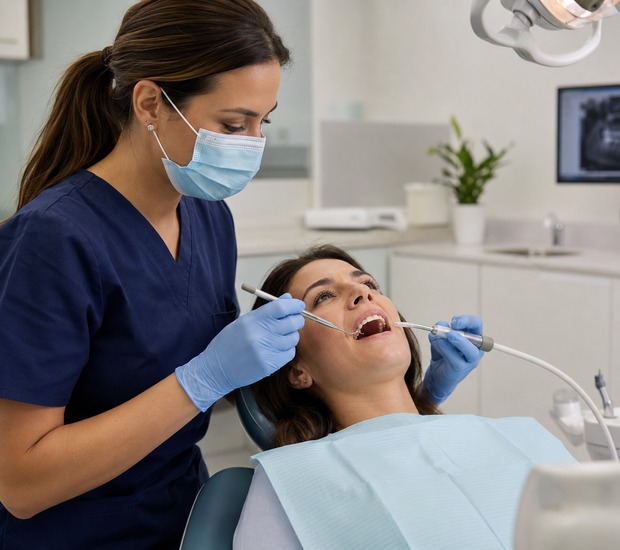
During a periodontal maintenance visit, the dental team may review your gum history, check for bleeding or inflammation, remove plaque and tartar, clean areas around the gumline, and monitor periodontal pockets.
Depending on your gum condition, the visit may also include updated gum measurements, X-rays when appropriate, review of home care, evaluation of loose teeth or gum recession, and discussion of whether the gums appear stable.
A dental cleaning and examination may be enough for patients with healthy gums, but patients with a history of gum disease often need a more periodontal-focused maintenance approach.
How Often Is Periodontal Maintenance Needed?
The timing of periodontal maintenance depends on the patient’s gum health, pocket depths, bleeding, tartar buildup, home care, medical history, smoking history, and risk of periodontal disease returning.
Some patients may need periodontal maintenance more often than twice a year because gum disease can return or progress between visits. A common interval is every three to four months, but the timing depends on how stable the gums remain.
The goal is not to keep patients on a schedule without explanation. The goal is to match the maintenance interval to the level of periodontal risk and the stability of the gums.
See our Google reviews: Read what patients are saying about Bailey Family Dental
Why Periodontal Maintenance Matters
Gum disease can become active again if bacteria and tartar collect below the gumline. Periodontal maintenance helps monitor areas that have already shown signs of disease and gives the dental team a chance to address changes before they become more advanced.
Without ongoing maintenance, periodontal pockets may deepen, bleeding may return, tartar can build up below the gumline, and bone support may continue to change. In more advanced cases, untreated periodontal problems can contribute to loose teeth or tooth loss.
If you are noticing gum swelling, bleeding, recession, bad breath, or loose-feeling teeth, those symptoms should be evaluated. Our Swollen Gums, Why Are My Gums Bleeding?, and Why Do My Teeth Feel Loose? pages explain those symptoms separately.
“The right maintenance interval depends on how stable the gums are, not just the calendar.”
Questions Answered on This Page
Q. What is periodontal maintenance?
Q. How is periodontal maintenance different from a regular cleaning?
Q. Who needs periodontal maintenance?
Q. What happens during a periodontal maintenance visit?
Q. How often is periodontal maintenance needed?
Q. Why does periodontal maintenance matter?
People Also Ask
Q. What is gum disease treatment?
Frequently Asked Questions
Q. Is periodontal maintenance the same as a regular cleaning?
A. No. A regular cleaning is usually for patients with generally healthy gums. Periodontal maintenance is for patients with a history of gum disease or periodontal treatment and focuses on monitoring gum stability, pocket depths, bleeding, and deeper buildup.
Q. Why do I need periodontal maintenance after a deep cleaning?
A. After a deep cleaning, periodontal maintenance may be recommended to help monitor the gums, remove buildup from deeper areas, and reduce the risk of gum disease becoming active again.
Q. How often do I need periodontal maintenance?
A. The timing depends on pocket depths, bleeding, tartar buildup, bone support, home care, medical history, smoking history, and how stable the gums remain over time.
Q. Can periodontal maintenance cure gum disease?
A. Periodontal maintenance does not erase a history of gum disease. It helps monitor and manage the condition so the gums can remain as stable as possible after treatment.
Q. What happens if I skip periodontal maintenance?
A. Skipping periodontal maintenance can allow plaque, tartar, and bacteria to build up again below the gumline. In some patients, this may lead to renewed inflammation, deeper pockets, bone loss, loose teeth, or worsening gum disease.
Reviewed by Brian Choi, DMD
General Dentist at Bailey Family Dental in Whittier, CA
Reviewed: July 2026
Need Periodontal Maintenance in Whittier?
Periodontal maintenance can help patients with a history of gum disease monitor pocket depths, bleeding, tartar buildup, bone support, and long-term gum stability. Bailey Family Dental can evaluate your gums and explain whether routine cleaning or periodontal maintenance is more appropriate.
Call Bailey Family Dental in Whittier at 562-698-8739 to schedule an appointment.