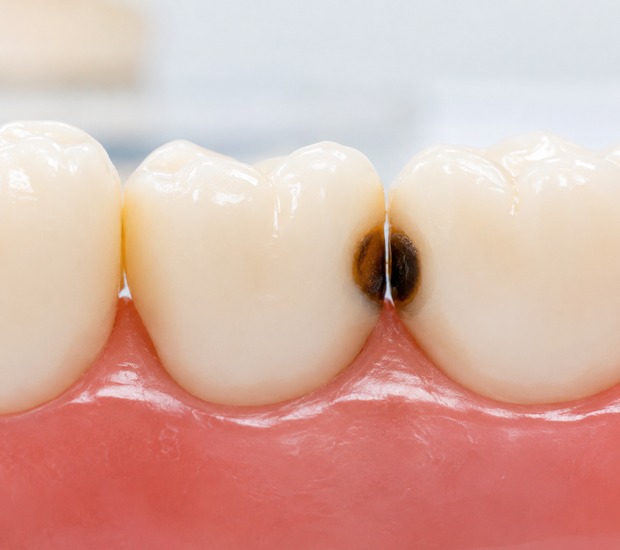
Cavities Between Teeth Whittier, CA
Cavities between teeth, sometimes called interproximal cavities, form in the contact areas where two teeth touch. These cavities can be easy to miss because they may not be visible from the outside and may not hurt in the early stages.
At Bailey Family Dental in Whittier, we evaluate cavities between teeth with an exam, X-rays when needed, symptom review, flossing history, and a tooth-by-tooth look at the area. The right treatment depends on how deep the cavity is, whether the tooth hurts, and how much healthy tooth structure remains.
Clinical insight: Cavities between teeth are one reason dental X-rays matter. A tooth can look normal from the outside while decay is starting or spreading between the teeth. For more detail, read our blog on Why You Need Dental X-Rays for a Checkup.
If you are worried about a cavity between teeth or food getting stuck, call Bailey Family Dental at (562) 698-8739 to schedule an evaluation.
What Are Cavities Between Teeth?
Cavities between teeth are areas of tooth decay that form where neighboring teeth touch. Dentists may call them interproximal cavities. They are common because plaque and food can collect in tight spaces that are harder to clean with a toothbrush alone.
These cavities can occur between front teeth, between premolars, or between back molars. They may start quietly and become larger before a patient notices pain, sensitivity, or food trapping.
This page focuses on cavities between teeth. For the broader topic of how cavities are diagnosed and treated, visit our Cavity Treatment page.
“A cavity between teeth can grow before it is visible or painful.”
Why Cavities Form Between Teeth
Cavities between teeth often form when plaque sits in the contact area between two teeth. A toothbrush usually cleans the outside and chewing surfaces better than the tight areas between teeth. This is why flossing, interdental brushes, and professional cleanings can matter.
Risk can also increase when a patient has dry mouth, frequent snacking or sipping, crowded teeth, open contacts that trap food, old fillings with rough edges, or areas that are difficult to clean.
Common reasons cavities develop between teeth include:
- Plaque between teeth: Bacteria can produce acids that weaken enamel in the contact area.
- Inconsistent flossing: Brushing alone may not clean the tight spaces between teeth well enough.
- Food trapping: Food caught between teeth can keep the area irritated and harder to clean.
- Dry mouth: Less saliva can make it harder to neutralize acids and protect enamel.
- Old dental work: Rough edges, open contacts, or leaking restorations can create areas where plaque collects.
- Frequent snacks or sugary drinks: Repeated acid exposure can raise cavity risk throughout the day.
For prevention guidance, visit our Preventative Dental Care page. For daily brushing and flossing basics, visit our Oral Hygiene Basics page. If dry mouth is a concern, read our blog on Can Dry Mouth Cause Cavities? If older dental work may be involved, visit our Cavity Under a Filling or Crown page.
Signs You May Have a Cavity Between Teeth
A cavity between teeth may not cause symptoms early. Some patients only find out during a dental checkup or on bitewing X-rays. When symptoms do appear, they may include sensitivity, food catching, floss tearing, roughness, or discomfort when chewing.
Symptoms can overlap with other dental problems, including gum recession, cracked teeth, open contacts, old fillings, or bite issues. That is why an exam is important before assuming the cause.
Possible signs include:
- Food getting stuck between teeth: This can happen with open contacts, cavities, broken fillings, or gum changes.
- Floss shredding or catching: Rough edges, decay, calculus, or older dental work can cause floss to catch.
- Sensitivity to sweets: Sweet sensitivity can happen when decay reaches deeper tooth structure.
- Cold sensitivity: Cold sensitivity may occur with cavities, exposed dentin, cracks, or gum recession.
- Dark shadow between teeth: A visible dark area may be staining, decay, or shadowing from the contact area.
- Pain when biting: Biting discomfort may suggest deeper decay, cracks, infection, or a high bite.
If food gets stuck often, read our related blog on Why Does Food Get Stuck Between My Teeth? If tooth pain is your main concern, visit our Tooth Pain page. If sweets trigger pain, read our blog on Why Do My Teeth Hurt When I Eat Sweets? If cold sensitivity is the main issue, visit our Tooth Sensitivity to Cold page.
How Dentists Find Cavities Between Teeth
Cavities between teeth are often found with a combination of visual exam, dental X-rays, symptom review, and checking the contact area. Bitewing X-rays can be especially helpful because they show areas between back teeth that are not easy to see directly.
We may also check whether floss catches, whether food is trapping, whether an old filling has an open edge, and whether the tooth has sensitivity or biting discomfort.
Clinical insight: X-rays do not replace the exam, but they are very useful for cavities between teeth. Without X-rays, some interproximal cavities can be missed until they are larger or symptomatic.
For more detail about why X-rays matter, read our blog on Why You Need Dental X-Rays for a Checkup. For routine exams and cleanings, visit our Dental Cleaning and Examinations page.
“Cavities between teeth are often found on X-rays before patients feel them.”
How Cavities Between Teeth Are Treated
Treatment depends on how deep the cavity is, whether the tooth surface has broken down, whether the tooth is sensitive or painful, and how much healthy tooth structure remains. A small cavity between teeth may need a filling. A larger cavity may need an inlay, onlay, crown, root canal treatment, or another option.
Not every early area between teeth needs immediate drilling. If the enamel surface is still intact and the area is very early, prevention and monitoring may be discussed. If the cavity has broken through the enamel or is progressing into dentin, a restoration is usually considered.
Treatment may depend on:
- Depth of decay: Early enamel changes may be handled differently than decay into dentin.
- Tooth structure: The tooth needs enough support to hold a filling or other restoration.
- Location: Cavities between molars can be harder to clean and may be under heavier chewing forces.
- Symptoms: Lingering cold sensitivity, spontaneous pain, or biting pain may change the recommendation.
- Old dental work: Decay around or under older fillings may require more than a simple filling replacement.
- Nerve health: If decay is deep enough to affect the nerve, root canal treatment may be discussed.
For small to moderate cavities that can be restored with tooth-colored material, visit our Composite Fillings page. If you are unsure whether a cavity always needs treatment, read our blog on Does a Cavity Always Need a Filling? For larger cavities, visit our Large Cavity: Filling vs. Crown vs. Root Canal page.
Cavities Between Molars
Cavities between molars are common because back teeth have broad contact areas and are harder to clean. Food can pack between molars, floss may be inconsistent, and plaque can stay in the contact area longer than patients realize.
Molars also handle heavier chewing forces. If a cavity between molars becomes large, the tooth may need more support than a simple filling can provide. The decision depends on cavity size, remaining tooth structure, symptoms, cracks, and the bite.
Clinical insight: A cavity between molars can look small from the outside but be larger once the contact area is opened and the decay is fully cleaned out.
If the cavity is large or the tooth feels weak, our Dental Crowns page explains when a crown may be recommended.
Can Cavities Between Teeth Be Prevented?
Many cavities between teeth are influenced by daily habits and cavity risk factors. Brushing is important, but it may not clean the contact areas between teeth by itself. Flossing or another interdental cleaning method can help clean areas a toothbrush misses.
Prevention also depends on diet frequency, dry mouth, fluoride exposure, regular cleanings, and whether old dental work is trapping plaque or food. Patients who get cavities easily may need a more specific prevention plan.
Helpful prevention steps may include:
- Cleaning between teeth daily: Floss, floss picks, or interdental brushes can help clean contact areas.
- Reducing frequent snacking or sipping: Repeated acid exposure can raise cavity risk.
- Managing dry mouth: Dry mouth can make cavities more likely and may need extra prevention steps.
- Regular dental cleanings: Professional cleanings help remove buildup in areas that are hard to reach.
- Checking old fillings: Rough or leaking edges can trap plaque and food.
- Using fluoride when appropriate: Fluoride can help support enamel and reduce cavity risk.
For more prevention information, visit our Dental Cleaning and Examinations page and our Dry Mouth page. If cavities keep coming back, read our blog on Why Do I Keep Getting Cavities?
“Brushing cleans many tooth surfaces, but the spaces between teeth need attention too.”
When a Cavity Between Teeth Becomes More Serious
A cavity between teeth becomes more serious when it spreads deeper into the tooth, weakens the contact area, causes food trapping, gets close to the nerve, or creates symptoms such as lingering sensitivity, biting pain, or spontaneous pain.
If decay reaches the nerve space or causes infection, root canal treatment may be needed. If too much tooth structure is lost, a crown or extraction may be discussed depending on whether the tooth can be restored predictably.
Clinical insight: The same location can mean very different treatment depending on depth. A shallow cavity between teeth may need a filling, while a deep cavity in the same area may involve the nerve or weaken the tooth.
To understand how decay progresses, visit our Tooth Decay Stages page. To understand the risks of waiting too long, read our blog on What Happens If You Do Not Fill a Cavity? If nerve involvement is a concern, visit our Do I Need a Root Canal? page.
Why Choose Bailey Family Dental for Cavities Between Teeth in Whittier?
Bailey Family Dental is located in Whittier and helps patients evaluate cavities between teeth, food trapping, floss catching, sensitivity, old filling problems, and cavities that may not be visible from the outside.
We focus on explaining what we see clearly. If X-rays show decay between teeth, we discuss the depth, symptoms, treatment options, and why a filling, crown, root canal evaluation, or monitoring approach may be recommended.
Clinical insight: Patients often feel surprised when a cavity between teeth is found because the tooth may look normal in the mirror. We try to show and explain the finding so the recommendation makes sense.
See our Google reviews: Read what patients are saying about Bailey Family Dental
Questions Answered on This Page
Q. What are cavities between teeth?
Q. Why do cavities form between teeth?
Q. What are signs of a cavity between teeth?
Q. How do dentists find cavities between teeth?
Q. How are cavities between teeth treated?
Q. Can cavities between teeth be prevented?
People Also Ask
Q. When does a cavity need a filling?
Frequently Asked Questions
Q. Can you see cavities between teeth?
A. Sometimes, but not always. Cavities between teeth may not be visible from the outside, especially in early stages. Dental X-rays are often helpful for finding decay in the contact areas between teeth.
Q. Do cavities between teeth hurt?
A. They may not hurt at first. As the cavity gets deeper, it may cause sensitivity to sweets or cold, food trapping, floss catching, chewing discomfort, or tooth pain.
Q. How are cavities between teeth fixed?
A. Many cavities between teeth are treated with fillings if enough healthy tooth structure remains. Larger or deeper cavities may need an inlay, onlay, crown, root canal treatment, or another option depending on the tooth.
Q. Can flossing prevent cavities between teeth?
A. Flossing can help clean plaque from between teeth and may reduce cavity risk. It is not the only factor, but it is important because brushing alone may miss the contact areas between teeth.
Q. Why does food keep getting stuck between my teeth?
A. Food trapping can happen because of open contacts, cavities, broken tooth structure, gum recession, calculus, or old dental work. An exam can help determine the cause.
Q. Can a cavity between teeth become a root canal?
A. Yes. If decay between teeth spreads deep enough to affect the nerve or cause infection, root canal treatment may be needed. Earlier evaluation can help catch decay before it becomes more involved.
Reviewed by Brian Choi, DMD
General Dentist at Bailey Family Dental in Whittier, CA
Reviewed: August 2026
Schedule an Evaluation for Cavities Between Teeth in Whittier
Cavities between teeth can be hard to see and may not hurt early. Bailey Family Dental can evaluate the area, review X-rays when needed, and explain whether monitoring, prevention, a filling, or another treatment option may be appropriate.
Call Bailey Family Dental in Whittier at 562-698-8739 to schedule an evaluation.