Why Does Food Get Stuck Between My Teeth?
Food getting stuck between teeth can be frustrating, especially when it happens in the same spot over and over. While it may seem minor, repeated food trapping can be a sign of spacing changes, gum recession, worn dental work, or tooth damage.
At Bailey Family Dental in Whittier, we can check the area where food keeps getting stuck and look for possible causes such as gum recession, worn fillings, cavities, open contacts, or tooth damage.
Quick answer: Food often gets stuck between teeth because of small gaps, gum recession, worn fillings, open contacts, cavities, cracked teeth, or changes in how the teeth fit together. If it keeps happening in the same spot, it is worth having the area checked.
Common Reasons Food Gets Stuck Between Teeth
Food trapping usually happens when there is an open space, uneven contact, or a change in the shape of the tooth or gum tissue.
- Small gaps or open contacts between teeth
- Gum recession
- Worn, loose, or poorly shaped fillings
- Cracked teeth or chipped teeth
- Shifting teeth over time
- Cavities between teeth or early tooth damage
- Decay near an old filling or crown
Why It Should Not Be Ignored
When food repeatedly gets trapped in one area, bacteria can build up around the teeth and gums. This can increase the risk of cavities, bad breath, gum inflammation, bleeding gums, and discomfort.
If the area starts feeling sore, sensitive, or painful when chewing, it may be part of a broader tooth pain pattern that should be evaluated.
What This Usually Means in Real Life
Personal insight: Patients often mention food getting stuck as a small annoyance, but it can give us an important clue. If it keeps happening in the same spot, there is usually a reason for it.
Sometimes the fix is simple, such as smoothing or replacing an old filling. Other times, the area may need treatment for decay, gum problems, or tooth damage.
How a Dentist Diagnoses the Cause
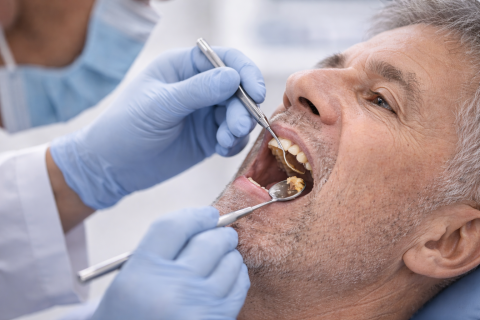
A dentist will examine the contact between the teeth, check the gums, look for worn dental work, and evaluate whether decay or tooth damage is present.
In some cases, dental X-rays may be needed to check for cavities between teeth or bone changes that are not visible during a regular exam.
How Food Trapping Is Fixed
Treatment depends on the cause. Options may include adjusting or replacing a filling, reshaping a rough area, treating gum inflammation, repairing a chipped tooth, or restoring the tooth with a dental crown if the damage is larger.
If food trapping is related to decay, early treatment can often prevent the problem from becoming more serious. Learn more about early warning signs on our Signs You May Have a Cavity page.
When to See a Dentist
If food frequently gets stuck in the same area, causes discomfort, creates bad breath, or makes the gums bleed, it is a good idea to schedule a dental visit.
A dental checkup can help identify the cause early, while ongoing preventative dental care can reduce the risk of future cavities and gum problems.
Reviewed by Brian Choi, DMD
General Dentist at Bailey Family Dental in Whittier, CA
Updated: June 2026
Food getting stuck in the same spot?
Repeated food trapping can be a sign of spacing changes, gum recession, worn fillings, or tooth damage. At Bailey Family Dental in Whittier, we can evaluate the area and recommend the right solution before it turns into a bigger problem.
We’re currently accepting new patients.
Book an Appointment