Can an Old Filling Leak or Fail? in Whittier, CA
Can an old filling leak or fail? Yes. Fillings protect teeth for years, but they do not last forever. Over time the seal between the filling and the tooth can break down, letting bacteria seep underneath, which can lead to sensitivity, new decay under the filling, or a cracked tooth.
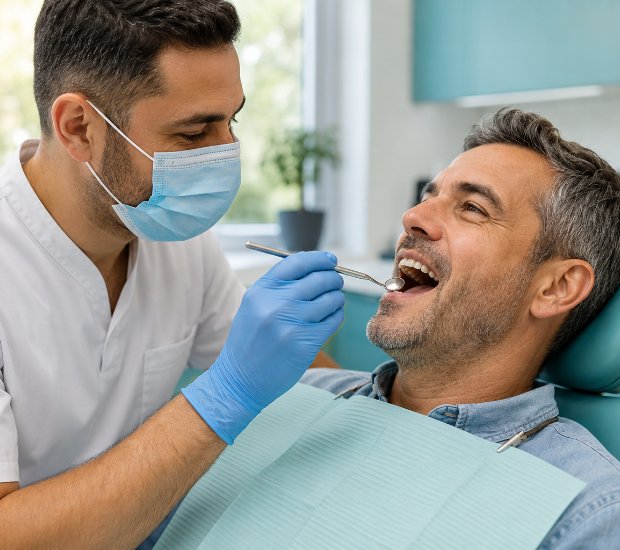
At Bailey Family Dental in Whittier, we check the condition of existing fillings at every exam. Catching a leaking filling early usually means a simpler, less expensive repair, often a straightforward replacement filling completed in a single visit.
Clinical insight: A filling can look perfectly normal and still be leaking underneath. Most failing fillings are found at routine exams and X-rays before the patient feels anything at all.
If you are concerned about an aging filling, call Bailey Family Dental at (562) 698-8739 to schedule an evaluation in Whittier.
What Does It Mean When an Old Filling Leaks?
A leaking filling means the seal between the filling material and the natural tooth is no longer tight. Saliva, bacteria, and food debris can seep into a microscopic gap at the edge of the filling. Dentists call this marginal leakage, and it is one of the most common reasons older dental work eventually needs to be replaced.
A failing filling is the broader problem: the filling may be worn flat, chipped, cracked, loose, or have decay forming around or beneath it. A leaking filling is not the same as a lost filling — the filling can look perfectly normal and still be leaking underneath. That hidden gap is what allows new decay to start in a tooth that was already treated once.
How Long Do Fillings Usually Last?
There is no fixed expiration date, but as a general guide, tooth-colored composite fillings often last about 7 to 10 years, and silver amalgam fillings often last 10 to 15 years or more. Our blog on how long tooth-colored fillings last explains what affects filling lifespan in more detail. Small fillings on low-stress surfaces can last decades. Large fillings that take heavy chewing force tend to wear out sooner.
Age alone is not a reason to replace a filling. An old filling with a tight seal and healthy tooth around it can stay right where it is. What matters is the condition of the margin where the filling meets the tooth — which is exactly what a dentist evaluates at a routine dental checkup.
“A filling can be old and still be doing its job. What matters is the seal, not the birthday.”
Why Do Old Fillings Leak or Fail?
Fillings live in a demanding environment. Every day they are exposed to chewing forces, temperature swings, acids, and moisture. A few common patterns account for most failures.
Everyday wear and chewing forces. Each bite flexes the tooth and the filling slightly. Over thousands of meals, the edges of a filling can wear down, chip, or pull away from the tooth. Patients who clench or grind their teeth tend to wear out fillings faster.
The seal breaks down at the edges. The margin, where the filling meets the tooth, is the weakest point of any restoration. Repeated expansion and contraction from hot and cold foods slowly fatigues this bond. Once the margin opens, bacteria can move in even though the filling itself looks intact.
Decay around or under the filling. Bacteria that reach the gap can cause what dentists call recurrent decay. Because it starts under or beside existing dental work, it is difficult to see at home and often causes no symptoms until it is deep. Our page on a cavity under a filling or crown explains how this type of decay is found and treated.
Cracks in the filling or the tooth. Large, older fillings leave less natural tooth structure around them. Over time the remaining walls of the tooth can crack under pressure, or the filling itself can fracture. A cracked tooth around an old filling often shows up first as pain when chewing.
What Are the Signs an Old Filling Is Leaking or Failing?
Many failing fillings cause no symptoms at first. That is normal, and it is why dentists check existing dental work at every exam rather than waiting for pain.
What Patients Usually Notice First
- New sensitivity to cold, heat, or sweets around a tooth that was fine before
- Pain or a twinge when biting down on that tooth
- A dark line, gray shadow, or stain at the edge of the filling
- Food or floss catching around the filling more than it used to
- A rough, sharp, or loose-feeling edge your tongue keeps finding
- A bad taste or odor coming from one area of the mouth
Any one of these is a reason to have the tooth looked at. None of them proves the filling has failed, but together with an exam and an X-ray they usually give a clear answer.
How Do Dentists Check Old Fillings?
At each exam, the dentist looks at the edges of every filling for staining, gaps, chips, and wear, and gently tests the margins with an explorer. The bite is checked as well, since a filling that has worn unevenly can change how the teeth meet.
Bitewing X-rays show what the eye cannot: decay starting under a filling or between teeth. Our blog on why you need dental X-rays for a checkup explains how often they are taken. Regular dental cleanings and examinations are how most leaking fillings are caught early, usually before the patient has felt anything at all.
“Most leaking fillings are found at a routine exam, not because the tooth started to hurt.”
How Is a Leaking or Failing Filling Treated?
Most of the time, treatment is straightforward: the tooth is numbed, the old filling and any decay beneath it are removed, and a new tooth-colored filling is placed — usually in a single visit. The approach is the same conservative one used for standard cavity treatment: remove what is damaged while preserving as much healthy tooth structure as possible.
If the old filling was silver amalgam, it is typically replaced with a tooth-colored composite that bonds to the tooth. If decay under the old filling turns out to be deeper than expected, the dentist will explain what was found and what the options are before going further.
When Is a New Filling Not Enough?
Each time a filling is replaced, a little more tooth structure is removed. Eventually the remaining walls of the tooth may be too thin to hold another filling reliably. In that case, a dental crown that covers and protects the whole tooth is often the more predictable repair.
The decision depends on how much healthy tooth remains, where the tooth is in the mouth, and how much force it takes when chewing. Our page comparing a large cavity filling vs a crown vs a root canal walks through how that decision is made. We explain the options and recommend the right level of care without pressure.
“The goal is to replace what has failed while preserving as much healthy tooth as possible.”
When Root Canal Treatment May Be Needed
If a filling has been leaking for a long time, decay can reach the nerve of the tooth. At that point a new filling alone cannot solve the problem, because the inside of the tooth is infected or inflamed. Root canal treatment removes the infected tissue, seals the canals, and usually saves the tooth, most often followed by a crown.
Lingering pain, heat sensitivity, swelling, or a tooth that aches at night are signs the nerve may be involved. If a tooth with an old filling becomes severely painful or swollen, contact an emergency dentist promptly rather than waiting for a routine appointment.
What Happens If a Leaking Filling Is Ignored?
Decay under a leaking filling keeps advancing quietly. What starts as a small gap at the margin can progress through the stages of tooth decay toward the nerve. A tooth that could have been fixed with a simple replacement filling may eventually need a crown, root canal treatment, or in the worst case an extraction.
Some failing fillings do not give much warning — a chunk of filling or tooth simply breaks off during a meal, or the whole filling comes out. Our blog on what to do if you lose a filling or crown covers those situations step by step. Waiting for pain is the most expensive strategy for an aging filling.
Can You Make Fillings Last Longer?
You cannot stop a filling from aging, but you can slow it down considerably. Daily brushing with fluoride toothpaste and flossing keep bacteria away from the margins. Limiting frequent sugary or acidic snacks reduces the acid attacks that erode both enamel and filling edges. Avoid chewing ice or very hard candies, which crack fillings and teeth alike.
If you clench or grind at night, a night guard protects fillings from forces they were never designed to take. And consistent preventative dental care means small margin problems are found while they are still small — the single biggest factor in how long dental work lasts.
Why Choose Bailey Family Dental for Aging Dental Work
Dr. Brian Choi and the team at Bailey Family Dental in Whittier take a conservative, evidence-based approach to old fillings. We do not recommend replacing dental work that is still sealing well, and when a filling does need attention, we explain what we see — often showing you the X-ray or photo — so you understand why before anything is done.
Patients from Whittier, La Mirada, La Habra, Santa Fe Springs, and the surrounding communities visit our office on Bailey Street for checkups, fillings, crowns, and second opinions on aging dental work. Whether your filling is five years old or twenty-five, we can tell you honestly whether it needs attention now, monitoring, or nothing at all.
See our Google reviews: Read what patients are saying about Bailey Family Dental
Questions Answered on This Page
Q. What does it mean when an old filling leaks?
Q. How long do fillings usually last?
Q. Why do old fillings leak or fail?
Q. What are the signs an old filling is failing?
Q. How do dentists check old fillings?
Q. How is a leaking or failing filling treated?
Q. What happens if a leaking filling is ignored?
People Also Ask
Q. Can a cavity form under an existing filling or crown?
Q. When does a tooth need a crown instead of a filling?
Frequently Asked Questions
Q. Should old silver fillings be replaced just because of their age?
A. No. A sound amalgam filling with a good seal does not need to be replaced because of its age or material. Dentists recommend replacement when there is leakage, decay, cracking, or a structural problem, not age alone.
Q. Can a leaking filling cause pain even if it looks fine?
A. Yes. The filling surface can look normal while bacteria work underneath it. Sensitivity to cold or sweets and pain when biting are common first symptoms, and some leaking fillings cause no pain until decay is deep.
Q. How can I tell if my filling failed or my tooth cracked?
A. It is hard to tell at home because the symptoms overlap; both can hurt when chewing. A dental exam and X-ray can usually tell the difference, and both problems are easier to fix when treated early.
Q. How long does it take to replace an old filling?
A. Most replacement fillings are completed in a single visit of about 30 to 60 minutes. If the tooth needs a crown or root canal treatment instead, the dentist will explain the timeline before starting.
Q. Does a leaking filling always mean a cavity has formed?
A. Not always. A margin can open before decay has started, and replacing the filling at that stage protects the tooth. That is the best-case scenario, and it is one reason regular checkups matter.
Reviewed by Brian Choi, DMD
General Dentist at Bailey Family Dental in Whittier, CA
Reviewed: October 2026
Wondering About an Old Filling?
A leaking filling can be hard to see and may not hurt early. Bailey Family Dental can examine the tooth, review X-rays when needed, and explain honestly whether the filling needs replacement, monitoring, or nothing at all. We’re currently accepting new patients.
Call Bailey Family Dental in Whittier at 562-698-8739 to schedule an evaluation.