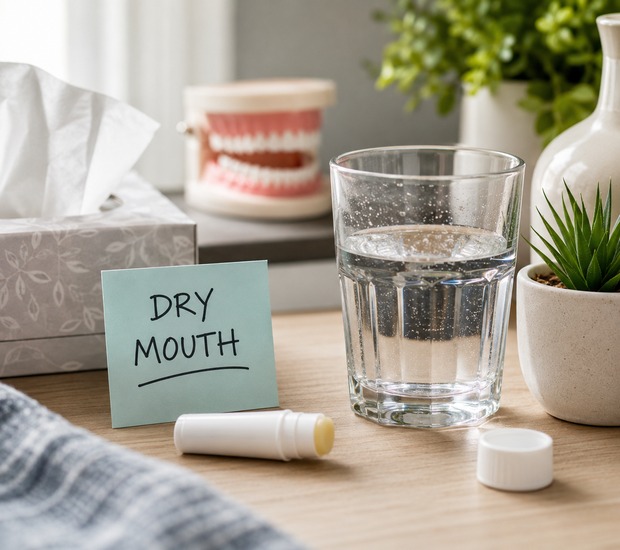
Dry Mouth in Whittier, CA
Dry mouth happens when there is not enough saliva to keep the mouth comfortably moist. It may feel like a dry, sticky, burning, or rough feeling in the mouth and can contribute to bad breath, cavities, tooth decay, tooth sensitivity, gum irritation, and oral discomfort.
At Bailey Family Dental in Whittier, CA, we evaluate dry mouth by checking your teeth, gums, saliva-related symptoms, medical history, medications, cavity risk, gum health, and areas that may be harder to keep clean. Call 562-698-8739 to schedule an appointment.
What Dry Mouth May Mean
Dry mouth, also called xerostomia, means the mouth does not have enough saliva to stay comfortably moist. It can happen occasionally from dehydration, stress, or mouth breathing, but persistent dry mouth should be evaluated because saliva helps protect the teeth and oral tissues.
Saliva helps wash away food particles, buffer acids, support chewing and swallowing, and keep the mouth more comfortable. When saliva is reduced, plaque, acids, and bacteria may remain in contact with the teeth and gums longer.
Personal insight: Patients often mention dry mouth only as an annoyance, but we also think about what dry mouth may be doing to the teeth and gums over time. Dry mouth can change a patient’s cavity risk, bad breath risk, gum comfort, and daily oral hygiene needs.
Common Signs of Dry Mouth
Dry mouth can feel different from person to person. Some patients feel thirsty all day, while others mainly notice bad breath, sticky saliva, burning, trouble swallowing, or more cavities than usual.
Signs that may point to dry mouth include:
- Dry or sticky feeling: The mouth may feel dry, pasty, rough, or uncomfortable.
- Frequent thirst: You may feel like you need water often, especially at night or when speaking.
- Bad breath: Reduced saliva can allow odor-causing bacteria and debris to linger.
- Burning or soreness: The tongue, lips, cheeks, or throat may feel irritated.
- More cavities or sensitivity: Teeth may become more vulnerable when saliva protection is reduced.
- Trouble chewing, swallowing, or speaking: A dry mouth can make daily functions feel harder.
If odor is the main concern, our Bad Breath page may help explain other possible causes. If dry mouth is happening with bleeding gums, gum irritation, or gum inflammation, that symptom should also be evaluated.
“Dry mouth is not just about comfort — it can change the risk for cavities, bad breath, and gum irritation.”
What Causes Dry Mouth?
Dry mouth can have many causes. It may be related to dehydration, mouth breathing, stress, tobacco use, alcohol use, caffeine, medical conditions, cancer treatment, or medications that reduce saliva flow.
Many patients do not realize how commonly medications can contribute to dry mouth. Blood pressure medications, allergy medications, antidepressants, anxiety medications, pain medications, decongestants, and other prescriptions or over-the-counter products may play a role.
If dry mouth may be related to medication, do not stop or change your medication without speaking with your physician or prescribing provider. We can help document oral signs of dryness and recommend that you discuss possible medication-related dry mouth with your medical provider.
How Dry Mouth Can Affect Teeth and Gums
When saliva is reduced, the teeth and gums may lose some of the natural protection saliva provides. Plaque and acids may stay on the teeth longer, which can increase the risk of cavities, enamel wear, sensitivity, and irritated gum tissue.
Dry mouth can also make it harder to wear dentures comfortably, speak for long periods, swallow certain foods, or keep the mouth feeling clean. Some patients notice a burning feeling, cracked lips, mouth sores, or changes in taste.
Dry mouth does not automatically mean you have gum disease, but it can make the oral environment harder to manage. If you have dry mouth along with bleeding gums, deeper pockets, bad breath, or gum recession, our Gum Disease Treatment page may help explain when periodontal evaluation is needed.
Can Dry Mouth Cause Cavities?
Dry mouth can increase cavity risk because saliva helps protect the teeth throughout the day. When saliva is reduced, acids, food particles, and bacteria may stay on the teeth longer. This can make cavities more likely, especially near the gumline, between teeth, around older fillings or crowns, and on exposed root surfaces.
Patients with dry mouth may notice more sensitivity, more food trapping, or cavities that seem to form even when they brush regularly. The goal is not only to make the mouth feel more comfortable, but also to lower the risk of future tooth decay.
If dry mouth is affecting your cavity risk, our Cavity Treatment page and our blog about whether dry mouth can cause cavities may help explain the connection.
How a Dentist Checks Dry Mouth
A dentist may evaluate dry mouth by reviewing your symptoms, medications, medical history, oral hygiene, cavity history, gum health, saliva-related concerns, and areas of the mouth that feel sore or irritated.
The exam may include checking for cavities, plaque and tartar buildup, gum inflammation, tooth sensitivity, gum recession, dry or irritated tissues, mouth sores, oral appliance irritation, and signs that the teeth may need added protection.
A dental cleaning and examination can help identify whether dry mouth is affecting the teeth or gums. If buildup, inflammation, cavity risk, or hidden tooth decay is a concern, dental X-rays may also be recommended.
See our Google reviews: Read what patients are saying about Bailey Family Dental
What Can Help With Dry Mouth?
What helps dry mouth depends on the cause. Some patients may benefit from drinking water more often, limiting tobacco or alcohol, reducing frequent sipping of sugary or acidic drinks, using sugar-free gum or lozenges, or using products designed for dry mouth.
Dental recommendations may include fluoride, improved oral hygiene tools, more frequent monitoring, cavity-prevention strategies, saliva substitutes, or discussion with a physician if medication or a medical condition may be contributing.
If you have dry mouth, avoid using sugary candies, sweet drinks, or frequent acidic drinks to keep the mouth moist. Those habits may temporarily feel soothing but can increase cavity risk.
Our Oral Hygiene Basics page explains daily habits that help keep the teeth and gums cleaner between dental visits.
“The best dry mouth plan depends on the cause, the cavity risk, and what we see during the dental exam.”
When to Schedule a Dental Evaluation for Dry Mouth
Schedule a dental evaluation if dry mouth is persistent, worsening, affecting eating or speaking, causing bad breath, causing burning or soreness, or if you are getting more cavities, sensitivity, gum irritation, or mouth sores than usual.
You should also mention dry mouth during dental visits if you started new medications, have a history of diabetes, autoimmune disease, radiation therapy, chemotherapy, or if you wake up with a very dry mouth regularly.
Dry mouth can have dental and medical causes. A dentist can evaluate the oral effects and help determine whether your physician or another healthcare provider should also be involved.
Questions Answered on This Page
Q. What are common signs of dry mouth?
Q. How does dry mouth affect teeth and gums?
Q. Can dry mouth cause cavities?
Q. How does a dentist check dry mouth?
Q. What can help with dry mouth?
Q. When should dry mouth be checked?
People Also Ask
Q. Can gum disease cause bad breath?
Frequently Asked Questions
Q. Is dry mouth bad for your teeth?
A. Dry mouth can increase dental risk because saliva helps protect the teeth and oral tissues. When saliva is reduced, patients may be more prone to cavities, sensitivity, bad breath, gum irritation, or oral discomfort.
Q. Can dry mouth cause bad breath?
A. Yes. Dry mouth can contribute to bad breath because reduced saliva may allow odor-causing bacteria and debris to remain in the mouth longer. Bad breath can also have other dental or medical causes.
Q. Can medications cause dry mouth?
A. Yes. Many prescription and over-the-counter medications can contribute to dry mouth. Do not stop or change medication without speaking with your physician or prescribing provider.
Q. What can I do for dry mouth?
A. What helps depends on the cause. Drinking water more often, avoiding tobacco, limiting alcohol, using sugar-free gum or lozenges, using dry mouth products, improving oral hygiene, and getting dental evaluation may help reduce dental risk.
Q. When should I see a dentist for dry mouth?
A. See a dentist if dry mouth is persistent, worsening, causing bad breath, burning, soreness, cavities, sensitivity, gum irritation, mouth sores, or trouble eating, speaking, or swallowing.
Reviewed by Brian Choi, DMD
General Dentist at Bailey Family Dental in Whittier, CA
Reviewed: August 2026
Concerned About Dry Mouth?
Dry mouth can affect comfort, breath, cavity risk, gum irritation, and daily oral hygiene. Bailey Family Dental in Whittier can evaluate your teeth, gums, saliva-related symptoms, medications, and dental risk factors to help determine the next step.
Call Bailey Family Dental in Whittier at 562-698-8739 to schedule a dry mouth evaluation.