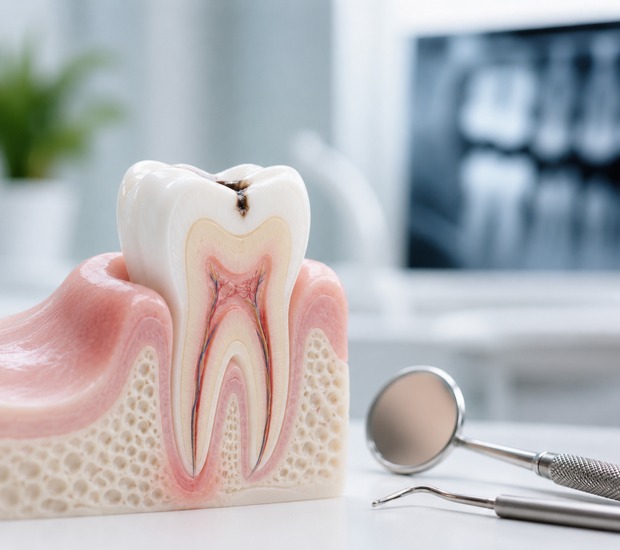
Tooth Infection Whittier, CA
A tooth infection, sometimes called a dental abscess, can develop when bacteria reach the inside of a tooth, the area around the root, or the gum and bone support near the tooth. Symptoms may include tooth pain, pressure, swelling, gum tenderness, a bad taste, fever, or discomfort when biting.
Bailey Family Dental in Whittier, CA evaluates tooth infections by checking the tooth, gums, bite, dental X-rays, swelling, drainage, and signs that the infection may be spreading. Call us at (562) 698-8739 to schedule an appointment.
What a Tooth Infection May Mean
A tooth infection means bacteria are causing inflammation or infection in or around a tooth. This may happen from deep decay, a cracked tooth, trauma, leaking dental work, gum disease, or another problem that allows bacteria to reach deeper tissues.
Some infections cause severe pain. Others may feel mild at first or drain through a small bump on the gums. Pain going away does not always mean the infection is gone, especially if pressure has started draining through the gum.
Personal insight: In our office, we do not judge a tooth infection by pain level alone. We look at the tooth, X-rays, swelling, drainage, gum condition, bite tenderness, and whether the infection appears localized or more urgent.
Common Signs of a Tooth Infection
A tooth infection can show up in different ways depending on the cause, location, and whether the infection is draining. Symptoms may be constant, come and go, or worsen when chewing.
Signs that may point to a tooth infection include:
- Tooth pain or pressure: Pain may feel sharp, throbbing, deep, or worse when biting.
- Swelling near the tooth or gums: Swelling may appear as tenderness, puffiness, or a gum bump near the tooth.
- Bad taste or drainage: A bad taste may happen if infection drains into the mouth.
- Sensitivity or bite pain: The tooth may feel sore when chewing or touching the area.
- Facial swelling, fever, or feeling unwell: These symptoms can be more urgent and should be taken seriously.
If the main symptom is tooth pain, our Tooth Pain page may also help you compare different pain patterns. If the main concern is gum swelling, our Swollen Gums page may also be helpful. If symptoms feel urgent, visit our Emergency Dentist page.
“A tooth infection can feel severe, but it can also drain quietly and still need treatment.”
What Causes a Tooth Infection?
A tooth infection often starts when bacteria reach areas that are normally protected. This can happen through deep cavities, cracks, trauma, worn or leaking dental work, or gum problems around the tooth.
When bacteria reach the nerve space inside the tooth, the tooth may need root canal treatment if it can be saved. If the tooth is too damaged, fractured, or unsupported, tooth extraction may be needed instead.
Gum-related infection can have a different source. If swelling or infection is related to periodontal pockets, tartar buildup, or gum disease, treatment may focus more on gum and bone support. Learn more on our Gum Disease Treatment page.
When to Call a Dentist for a Tooth Infection
Call a dentist promptly if you have tooth pain with swelling, a gum bump, drainage, bad taste, pain when biting, fever, or symptoms that are worsening. A tooth infection usually needs evaluation because the source of the infection may still be present even if pain temporarily improves.
If swelling is spreading, the face is becoming more swollen, or symptoms are getting worse quickly, the situation may be more urgent. If you are not sure whether to call a dentist or go to the emergency room, our Emergency Dentist vs. Emergency Room page explains how to decide.
Go to the emergency room right away if swelling affects breathing or swallowing, if there is severe facial swelling, suspected spreading infection, uncontrolled bleeding, severe trauma, or symptoms that feel medically serious.
How a Dentist Checks a Tooth Infection
A dentist checks for a tooth infection by reviewing your symptoms, examining the tooth and gums, taking dental X-rays, testing bite tenderness, checking for swelling or drainage, and looking for signs that the tooth nerve or surrounding bone may be involved.
The exam helps determine whether the infection is likely coming from the tooth, the gums, a crack, an old restoration, trauma, or another source. This distinction matters because treatment depends on the cause.
A general dentist can often identify the likely source and explain whether the tooth may need root canal treatment, extraction, drainage, gum treatment, medication, monitoring, or referral.
See our Google reviews: Read what patients are saying about Bailey Family Dental
How Tooth Infections May Be Treated
Treatment depends on the source of the infection and whether the tooth can be saved. If the infection is coming from inside the tooth and the tooth is restorable, root canal treatment may be recommended to remove the infected tissue and seal the tooth.
If the tooth is cracked, severely decayed, has poor bone support, or cannot be predictably restored, extraction may be the better option. If swelling or drainage is present, the dentist may also need to address the source of infection and determine whether medication is appropriate.
Antibiotics may be recommended in some situations, especially if infection is spreading or there are certain medical concerns, but antibiotics alone usually do not fix the source of a tooth infection. The dental source still needs to be evaluated.
“The goal is not just to reduce pain — it is to find and treat the source of the infection.”
Questions Answered on This Page
Q. What does a tooth infection mean?
Q. What are common signs of a tooth infection?
Q. What causes a tooth infection?
Q. When should I call a dentist for a tooth infection?
Q. How does a dentist check a tooth infection?
Q. How are tooth infections treated?
People Also Ask
Q. When is a dental problem an emergency?
Q. Should I go to the ER or dentist for dental pain?
Q. Could severe pain mean I need a root canal?
Frequently Asked Questions
Q. Is a tooth infection serious?
A. Yes, a tooth infection should be taken seriously. Some infections stay localized, but others can worsen or spread. Dental evaluation is needed to identify the source and decide the appropriate treatment.
Q. Can a tooth infection go away on its own?
A. A true tooth infection usually does not go away on its own. Pain may temporarily improve if drainage occurs, but the source of infection often remains until it is treated by a dentist.
Q. When is a tooth infection an emergency?
A. A tooth infection may be urgent if there is facial swelling, fever, severe pain, swelling that is worsening, drainage, or a bad taste. Go to the emergency room right away if swelling affects breathing or swallowing or if symptoms feel medically serious.
Q. Can antibiotics fix a tooth infection?
A. Antibiotics may help in certain situations, especially when infection is spreading, but they usually do not remove the dental source of the infection. The tooth or gum source still needs to be evaluated and treated.
Q. Can a tooth infection be treated with a root canal?
A. Sometimes. If the infection is coming from inside the tooth and the tooth can be restored, root canal treatment may help save the tooth. If the tooth is too damaged or unsupported, extraction may be needed.
Reviewed by Brian Choi, DMD
General Dentist at Bailey Family Dental in Whittier, CA
Reviewed: July 2026
Concerned About a Tooth Infection?
A tooth infection can worsen if the source is not treated. Bailey Family Dental in Whittier, CA can evaluate the tooth, check for swelling or drainage, review X-rays, and explain whether treatment may involve root canal treatment, extraction, gum treatment, medication, or another next step.
Call Bailey Family Dental in Whittier at 562-698-8739 to schedule a tooth infection evaluation.