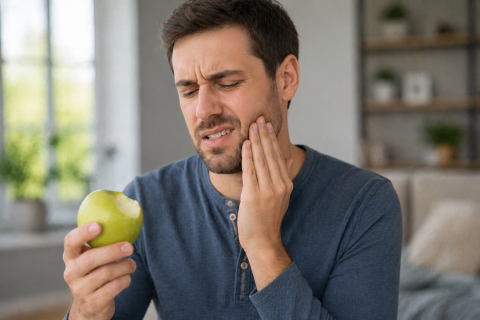
Why Does My Tooth Hurt When I Chew Sometimes?
If your tooth hurts when you chew sometimes but not always, it can be confusing. The pain may come and go depending on the type of food, the amount of pressure, or how the tooth is positioned when you bite.
In many cases, this type of discomfort is related to how the tooth handles pressure. At Bailey Family Dental in Whittier, we evaluate chewing pain by checking the bite, cracks, cavities, existing fillings or crowns, dental X-rays, and whether the tooth may need a filling, crown, root canal treatment, or another option.
Quick answer: A tooth that hurts when chewing sometimes may have a small crack, cavity, bite problem, worn dental work, or weakened tooth structure. Even if the pain comes and goes, it should be checked before it becomes more frequent or harder to treat.
Why Tooth Pain Can Come and Go When Chewing
Tooth pain that only happens sometimes is usually triggered under specific conditions. For example, you may feel pain when biting on one side, when chewing certain foods, or when pressure is applied at a particular angle.
This pattern is different from sensitivity to cold or sweets, which is triggered by temperature or sugar exposure. Intermittent chewing pain is typically related to pressure on the tooth.
Common Causes of Intermittent Chewing Pain
There are several reasons a tooth may hurt when chewing but not consistently.
- A small crack in the tooth that opens under pressure
- Inflammation around the root or supporting structures
- A developing cavity affecting deeper layers of the tooth
- Decay under an old filling or crown
- A bite imbalance causing one tooth to absorb more force
- Worn, uneven, or weakened dental work
If the pain becomes more consistent or noticeable with pressure, it may be related to tooth pain when biting down, which is evaluated separately.
This article focuses on chewing pain that comes and goes, while that page covers pain more directly tied to biting pressure. If the tooth hurts more when you let go after biting, read our Tooth Hurts When Releasing Pressure blog.
What This Usually Means in Real Life
Personal insight: Patients often describe this as a “sometimes” pain that is easy to ignore at first. In our experience, when the discomfort keeps returning in the same area, there is usually an underlying cause such as a small crack or early structural issue.
Even though the pain is not constant, it does not usually resolve on its own without addressing the source of the problem.
When Intermittent Pain May Be a Bigger Concern
If the pain becomes sharper, more frequent, or starts lingering after chewing, it may indicate that the tooth is becoming more inflamed or damaged.
Swelling, gum tenderness, or discomfort that begins to affect normal chewing are signs that the issue should be evaluated sooner rather than later.
If the pain becomes severe or difficult to manage, it may require prompt care from an emergency dentist.
How a Dentist Diagnoses the Problem
A dentist will examine how the tooth responds to pressure, check the bite, and look for signs of cracks, decay, inflammation, large fillings, or weakened tooth structure.
In some cases, imaging such as dental X-rays may be used to identify problems that are not visible during a standard exam.
Treatment Options
Treatment depends on the cause of the pain.
- Minor bite adjustments to relieve pressure
- Repairing or replacing worn dental work
- Restorations such as fillings or dental crowns
- Root canal treatment if the nerve is affected
The goal is to identify the issue early before it progresses into more persistent tooth pain. If a crack or damaged tooth structure is involved, our Broken or Cracked Tooth Repair page explains repair options in more detail.
When to See a Dentist
If your tooth hurts when chewing, even occasionally, it is a good idea to have it evaluated. Intermittent symptoms are often an early sign of a problem that can become more serious over time.
A dental checkup can help identify the cause, while ongoing preventative dental care can help reduce future issues.
Reviewed by Brian Choi, DMD
General Dentist at Bailey Family Dental in Whittier, CA
Updated: June 2026
Tooth pain when chewing?
Even occasional pain when chewing can be a sign of a crack, bite issue, or developing dental problem. At Bailey Family Dental in Whittier, we can evaluate the cause and recommend the right treatment before it gets worse.
We’re currently accepting new patients.
Book an Appointment