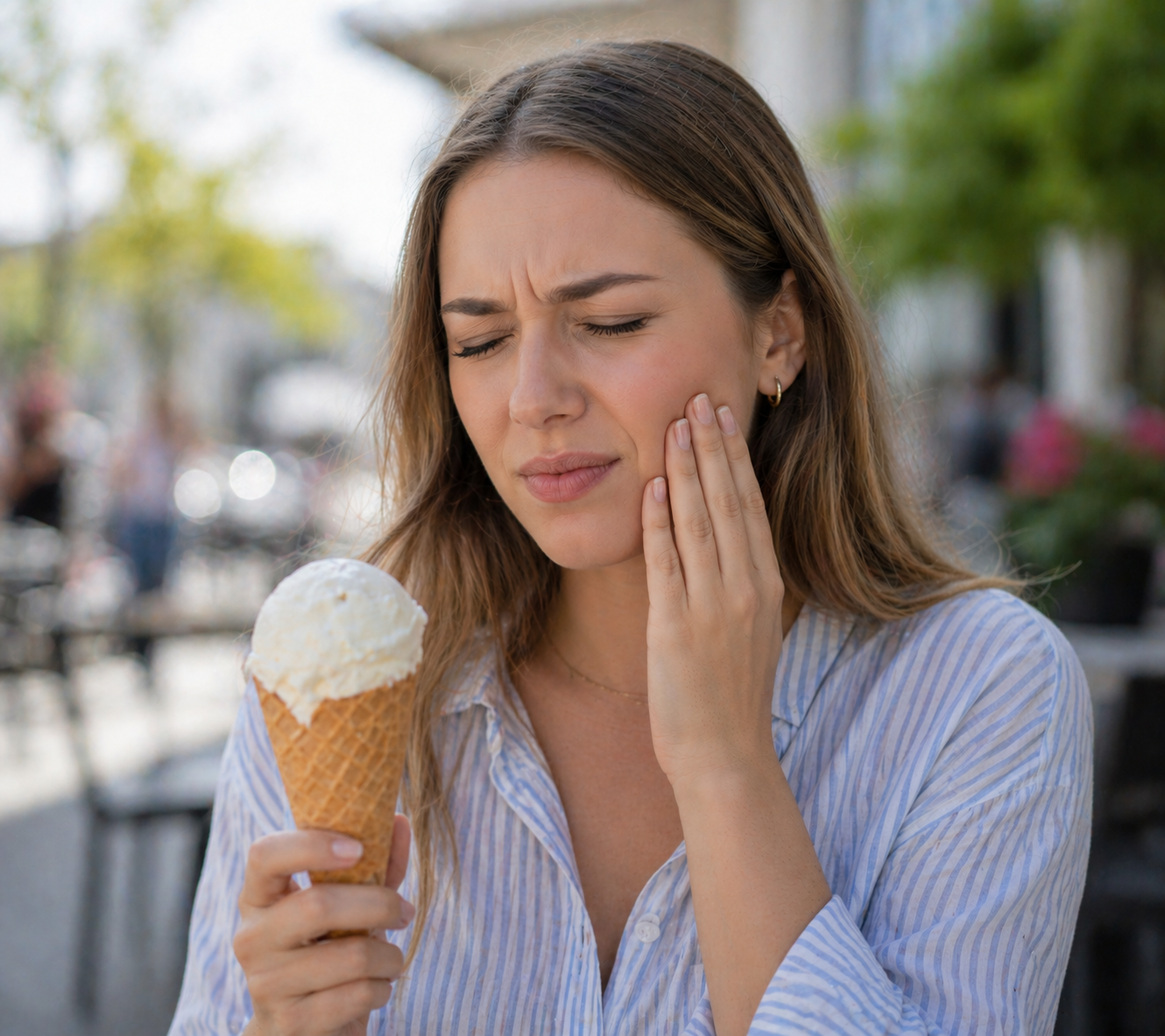
Tooth Sensitivity to Cold in Whittier, CA
If your teeth hurt when exposed to cold drinks, cold air, or cold foods, it usually means that the protective layers of the tooth are not fully intact. Cold sensitivity is one of the most common types of tooth pain and is often triggered instantly when the tooth is exposed.
This type of sensitivity is different from pain caused by pressure, sweets, or spontaneous toothaches. At Bailey Family Dental, we evaluate how your teeth respond specifically to temperature so we can identify the cause and recommend the right treatment. If the pain is severe or worsening, it may require evaluation by an emergency dentist.
Why Do Teeth Hurt When Exposed to Cold?
Cold sensitivity usually occurs when the inner part of the tooth becomes exposed. This can happen when enamel is worn down or when the root surface is no longer protected.
When cold touches the tooth, it can stimulate the nerve inside, causing a sharp or sudden pain. This type of reaction is typically immediate and stops once the cold stimulus is removed.
Unlike pressure-related pain or sweets sensitivity, cold sensitivity is specifically triggered by temperature and is evaluated separately from other types of tooth pain.
In our office, we often see patients who describe a quick, sharp pain with cold drinks that disappears right away. That pattern usually points to exposed tooth structure rather than deeper infection.
Cold sensitivity is one of the most common symptoms we evaluate. In many cases, it is related to enamel wear or gum recession rather than something more serious, but we always check carefully to rule out deeper issues when the sensitivity lingers.
Common Causes of Cold Sensitivity
There are several reasons why teeth may become sensitive to cold.
One of the most common causes is worn enamel. This can happen over time from brushing habits, grinding, or acidic foods.
Another frequent cause is gum recession, which exposes the root surface of the tooth. The root is more sensitive than enamel and reacts more strongly to temperature changes.
Early cavities can also cause cold sensitivity, especially if decay begins affecting deeper layers of the tooth. Learn more about early signs on our Signs You May Have a Cavity page, or visit our Cavity Treatment page if decay has already been diagnosed.
When Cold Sensitivity May Be a Bigger Problem
Not all cold sensitivity is the same. If the pain is brief and goes away quickly, it is often related to exposed tooth structure.
However, if the pain lingers after the cold is removed or becomes more intense over time, it may indicate deeper inflammation or nerve involvement.
If you notice pain when chewing or biting instead of temperature sensitivity, it may be related to pressure rather than cold. See our Tooth Pain When Biting Down page for more information.
If the discomfort occurs mainly with sweets, it may be related to early decay or enamel damage and should be evaluated separately.
How Cold Sensitivity Is Treated
Treatment depends on the cause of the sensitivity.
If the issue is enamel wear, fluoride treatments or desensitizing products may help strengthen the tooth and reduce discomfort.
If gum recession is present, treatment may focus on protecting the exposed root surface and managing gum health.
If decay or structural damage is involved, restorative treatment may be needed to correct the problem and prevent it from worsening.
A general dentist can determine the exact cause and recommend the appropriate treatment based on your specific symptoms. In some cases, dental X-rays may be needed to check for decay, cracks, or deeper problems that are not visible during a visual exam alone.
See our Google reviews: Read what patients are saying about Bailey Family Dental
Questions Answered on This Page
Q. Why do teeth hurt when exposed to cold?
Q. What causes cold sensitivity?
Q. When is cold sensitivity a bigger problem?
Q. How is cold sensitivity treated?
People Also Ask
Q. What type of tooth pain do I have?
Q. Can a cavity cause cold sensitivity?
Q. What are the stages of tooth decay?
Frequently Asked Questions
Q. Why are my teeth sensitive to cold?
A. Teeth may become sensitive to cold when enamel is worn, gum recession exposes root surfaces, or decay affects deeper layers of the tooth.
Q. Is cold sensitivity always a cavity?
A. No. Cold sensitivity can come from enamel wear, gum recession, exposed roots, grinding, whitening sensitivity, or cavities. A dental exam helps identify the cause.
Q. When should I see a dentist for cold sensitivity?
A. You should see a dentist if cold sensitivity is getting worse, lasts after the cold is removed, affects one specific tooth, or happens with chewing, swelling, or other tooth pain.
Q. Can gum recession cause cold sensitivity?
A. Yes. Gum recession can expose the root surface of a tooth. Root surfaces are more sensitive than enamel and may react strongly to cold drinks, cold air, or cold foods.
Q. How is tooth sensitivity to cold treated?
A. Treatment depends on the cause. Options may include desensitizing products, fluoride, changes to brushing habits, treating gum recession, or restoring decay or damaged tooth structure.
Reviewed by Brian Choi, DMD
General Dentist at Bailey Family Dental in Whittier, CA
Reviewed: June 2026
Cold Sensitivity Should Be Checked if It Persists
Tooth sensitivity to cold can come from enamel wear, gum recession, early decay, exposed root surfaces, or deeper tooth irritation. Bailey Family Dental can evaluate the cause, review X-rays when needed, and explain whether prevention, desensitizing treatment, a filling, or another option may be appropriate.
Call Bailey Family Dental in Whittier at 562-698-8739 to schedule an evaluation.