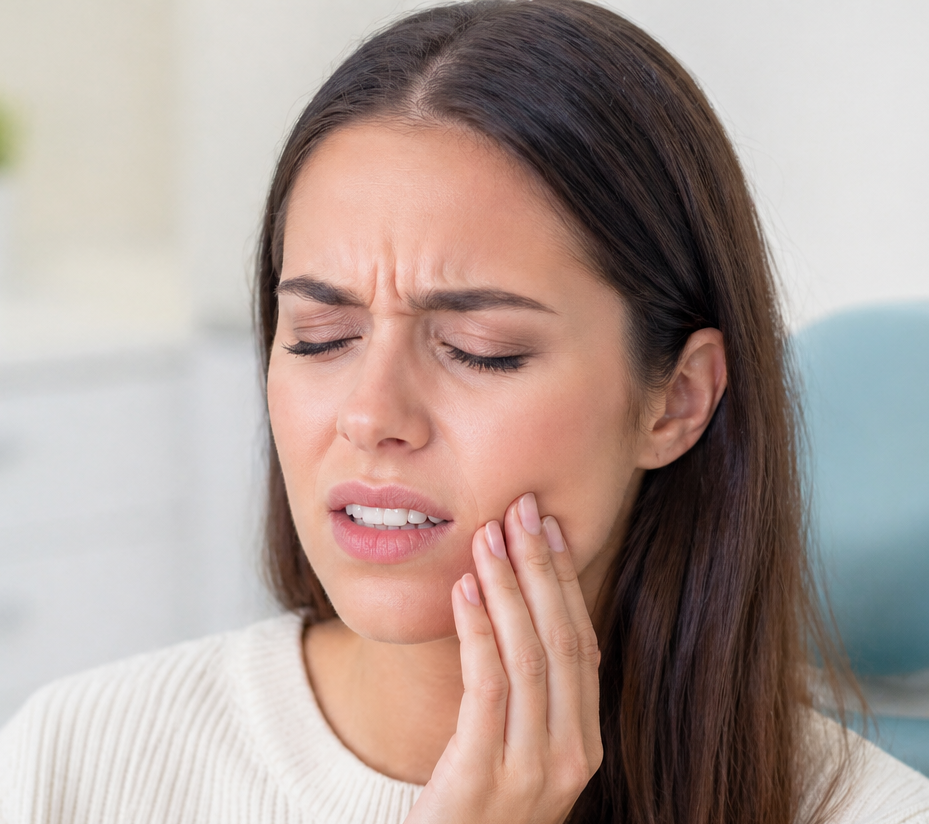
Tooth Pain When Biting Down in Whittier, CA
If your tooth hurts when you bite down, it usually means something isn’t handling pressure correctly. Many patients describe this as pain when chewing, biting into food, or releasing pressure after biting. While this symptom is common, it is not something to ignore, especially if it continues or worsens over time.
In many cases, this type of pain is caused by a cracked tooth, inflammation around the root, a cavity, or a bite imbalance. At Bailey Family Dental, we evaluate how the tooth responds to pressure and identify the exact cause so we can recommend the right treatment. If the pain is severe or getting worse, it may require prompt care from an emergency dentist.
Why Does My Tooth Hurt When I Bite Down?
Pain when biting down usually means that the tooth or the surrounding structures are not handling pressure normally. Unlike temperature sensitivity or spontaneous toothaches, this symptom is specifically triggered by force.
One of the most common causes is a cracked tooth. Even a small crack can open slightly under pressure and irritate the inner nerve or surrounding tissue. These issues are often difficult to see without a clinical exam, but they are something we diagnose frequently.
Symptom patterns can vary depending on the type of crack. For more detail, visit our Cracked Tooth Symptoms page. If a crack is confirmed, treatment depends on how deep it extends, which is covered on our Broken or Cracked Tooth Repair page.
Another common cause is inflammation of the periodontal ligament, which is the structure that helps anchor the tooth to the bone. When this ligament becomes irritated, even normal biting pressure can feel uncomfortable or painful.
Cavities can also lead to pressure pain, especially if decay has reached deeper layers of the tooth. In some cases, bacteria may begin affecting the pulp, leading to increased sensitivity when chewing.
A bite imbalance is another possibility. If one tooth is hitting harder than the others, it can become overloaded and painful when you bite down. This is something we often see after new dental work or gradual shifting of teeth.
Other types of tooth pain, such as sensitivity to cold or sweets, are usually related to different underlying causes and are evaluated separately. This page focuses specifically on pressure-related pain when biting or chewing.
In our office, one of the most common patterns we see is patients pointing to a very specific tooth that hurts when they bite, especially on one side. When the pain is that localized and tied to pressure, it is often related to a small crack or inflammation around that tooth. These issues are usually very treatable once identified, but they tend not to resolve on their own without addressing the underlying cause.
When Pain While Biting May Be a Bigger Problem
Not all biting pain is severe, but certain patterns suggest that the problem may require prompt attention. If the pain is sharp, worsening, or lingering after you release pressure, it may indicate a deeper issue.
One important detail we look for is whether the pain occurs when you release pressure, not just when you bite down. Pain on release is commonly associated with a cracked tooth and should be evaluated promptly. You can read more about this specific pattern on our tooth pain when releasing pressure page.
Swelling, gum tenderness around a specific tooth, or pain that feels more intense over time can point to infection or structural damage. In these cases, waiting may allow the condition to progress.
Patients sometimes describe a sensation where the tooth feels “off” or uncomfortable when chewing. This can be a sign of bite imbalance or ligament inflammation that needs adjustment.
If biting pain is persistent, it is best to have it evaluated by a general dentist to determine whether the issue is minor or something more serious.
What You Should Do If It Hurts When You Bite Down
If you are experiencing pain when biting down, the first step is to reduce pressure on the affected tooth. Try to avoid chewing on that side, especially with hard or crunchy foods that may worsen the irritation.
It is also important not to ignore the symptom. While some minor irritation can improve, persistent pressure pain often indicates a structural or inflammatory issue that will not resolve on its own.
Over-the-counter pain relief may help temporarily, but it does not address the underlying cause and should not replace proper evaluation.
If the pain becomes severe, or if you notice swelling or difficulty chewing, it may require prompt care through our emergency dentist services.
How a Dentist Fixes Tooth Pain When Biting Down
The treatment for tooth pain when biting down depends on the cause. Because this symptom can come from several different issues, an accurate diagnosis is essential before deciding on treatment.
If the problem is a bite imbalance, a simple adjustment may relieve the pressure and eliminate the discomfort. This is one of the more straightforward solutions when the issue is caught early.
If a cracked tooth is identified, treatment often involves placing a crown to protect the tooth. The exact approach depends on the depth of the crack, which is covered in more detail on our Broken or Cracked Tooth Repair page. In cases where the inner nerve is affected, a root canal treatment may be necessary to remove infection and relieve pain.
For patients who are unsure whether their symptoms point to a deeper issue, our Do I Need a Root Canal page explains how we evaluate these situations and when treatment is recommended.
If the tooth is severely damaged and cannot be restored, tooth extraction may be recommended. However, this is typically considered only after other options have been evaluated.
In many cases, patients are relieved to find that the cause is identifiable and treatable once the correct diagnosis is made.
See our Google reviews: Read what patients are saying about Bailey Family Dental
Questions Answered on This Page
Q. Why does my tooth hurt when I bite down?
Q. When is pain while biting a bigger problem?
Q. What should I do if it hurts when I bite down?
Q. How does a dentist fix tooth pain when biting down?
People Also Ask
Q. Can a cracked tooth cause pain when biting?
Q. Why does my tooth hurt when I release pressure?
Frequently Asked Questions
Q. Why does my tooth hurt when I bite but not all the time?
A. Intermittent pain when biting can be caused by a small crack, ligament inflammation, a developing cavity, or a bite problem. These issues may only hurt under certain pressure conditions.
Q. Can a cracked tooth cause pain when chewing?
A. Yes. A cracked tooth is one of the common causes of pain when biting down. Pressure can cause the crack to flex slightly, irritating the nerve or surrounding tissue.
Q. Why does my tooth hurt when I release pressure?
A. Pain when releasing pressure can be associated with a cracked tooth or another structural problem. This pattern should be evaluated because the tooth may flex when pressure is removed.
Q. Can a cavity cause pain when biting down?
A. Yes. A deeper cavity can irritate the tooth, weaken the tooth structure, or affect the nerve, which may cause pain when chewing or biting down.
Q. Will tooth pain when biting go away on its own?
A. Some minor irritation can improve, but persistent pain when biting usually means there is an underlying issue that should be evaluated. Waiting may allow the problem to worsen.
Reviewed by Brian Choi, DMD
General Dentist at Bailey Family Dental in Whittier, CA
Updated: June 2026
Do Not Ignore Tooth Pain When Biting Down
Pain when biting down can come from a cracked tooth, a cavity, inflammation around the root, bite imbalance, or another dental problem. Bailey Family Dental can evaluate the tooth, review X-rays when needed, and explain whether a filling, crown, root canal treatment, bite adjustment, extraction, or another option may be appropriate.
Call Bailey Family Dental in Whittier at 562-698-8739 to schedule an evaluation.